
Why Outdoor Wood Turns Silver-Grey and How to Keep or Stop It
The molecular science of UV weathering, and the design choices of embracing or preventing natural timber patina.
Quick Answer: Wood turns grey outside because solar ultraviolet (UV) radiation photo-chemically degrades lignin—the organic polymer that gives timber its warm, golden-brown coloration. Once rain and wind wash away these degraded lignin molecules, a highly resilient, silver-grey skeleton of pure cellulose remains exposed on the surface. This weathering process is entirely superficial, leaving the structural core of the wood completely undamaged.
Key Takeaways
- The Lignin Shift: UV radiation breaks down lignin, the natural glue of wood fibers, leaving behind pale, weathered cellulose.
- Cosmetic vs. Structural: Silvering is a surface-level adaptation to light; it does not indicate rot, decay, or loss of structural integrity.
- Uniformity Challenges: Uneven weathering typically occurs in shaded or protected zones, such as directly under roof overhangs.
- Silicate Mineralization: Advanced potassium-silicate treatments can accelerate and guarantee a beautifully uniform, driftwood-grey patina.
- Preservation Strategy: Applying pigment-rich, deep-penetrating oils with hydrophobic UV-blockers stops wood from turning grey outside.
Why does wood turn grey outside?
Wood turns grey outside because of a natural photochemical reaction called photodegradation, driven primarily by solar ultraviolet (UV) radiation. Timber is primarily composed of cellulose, hemicellulose, and lignin. Lignin is the organic complex polymer that binds the cellulose fibers together and contains the natural pigments that give different wood species their rich, warm coloration. However, lignin is highly sensitive to light and absorbs up to 90% of the solar UV radiation that reaches the wood's surface.
When exposed to sunlight, UV-A and UV-B wavelengths (between 290 and 400 nm) break down the chemical bonds of the lignin molecule. This chemical breakdown converts the stable lignin into water-soluble compounds. When the timber is subjected to rain, dew, or wind, these degraded compounds are washed away from the surface. The remaining, highly stable cellulose skeleton is naturally white or translucent, which appears to the human eye as a refined, mineral silver-grey patina.
According to wood science research, this photochemical weathering is extremely shallow, generally affecting only the outermost 0.1 to 2.5 millimeters of the timber. Because the underlying wood fibers remain chemically unaltered, weathered decking and cladding retain their structural strength and density, provided the wood is not subjected to biological decay.
What is the difference between silvering wood and wood decay?
The primary difference between silvering wood and wood decay is that silvering is a harmless cosmetic change caused by sunlight, whereas decay is a destructive structural breakdown caused by wood-rotting fungi. Silvering wood remains hard and structurally sound beneath its thin grey layer, while decaying wood absorbs excessive moisture, softens, crumbles, and loses its load-bearing capacity.
To distinguish between these two phenomena, architects and builders look at the texture and integrity of the timber. Weathered decking has a slightly raised, velvety grain that catches low-angled light but remains firm to the touch. In contrast, decay manifests as deep cracks across the grain, localized soft spots, and fungal growth, usually in areas with poor ventilation and standing water. Understanding this distinction is critical when managing outdoor timber installations.
| Characteristic | Silvering Wood (UV Weathering) | Wood Decay (Rot) |
|---|---|---|
| Primary Cause | Solar UV radiation and rain washing. | Wood-destroying fungi thriving in moisture. |
| Depth of Effect | Superficial (top 0.1 to 2.5 mm). | Deep penetration through the entire core. |
| Structural Integrity | Completely preserved and structurally sound. | Severely compromised, soft, and brittle. |
| Visual Appearance | Uniform or patchy silver, grey, or driftwood tones. | Dark brown or white discoloration, fibrous cracking. |
| Preventative Action | Pigmented UV-inhibiting penetrating oils. | Proper drainage, ventilation, and biocides. |
How do you embrace weathered decking with a uniform silver-grey patina?
You can embrace weathered decking uniformly by treating the timber with advanced potassium-silicate mineral treatments that accelerate and guide the natural silvering process. These silicate treatments infuse the wood fibers with mineral crystals, ensuring that areas sheltered from direct sunlight and rain—such as under roof overhangs—weather at the same rate as highly exposed zones.
In natural settings, uneven weathering is the greatest aesthetic challenge for architects. Areas of a building's facade or deck that receive less sun and rain can retain their original orange-brown coloration for years, resulting in a patchy, stained appearance. To combat this, the modern architectural movement utilizes silicate-based pre-treatment systems. These products, such as those discussed in timber performance evaluations, mimic natural fossilization, curing within the wood cells to produce an immediate, elegant grey luster that matures beautifully over time into a uniform, driftwood-like finish.
Embracing a silver-grey patina aligns perfectly with wabi-sabi design principles, celebrating the beauty of natural aging. This mineral-grey finish creates a stunning, quiet luxury aesthetic when paired with sharp modern elements like raw board-marked concrete, glass facades, and black steel frames.
How do you prevent grey decking and preserve warm wood tones?
To prevent grey decking, you must apply deep-penetrating, pigment-rich oils or hydrophobic sealers containing micro-fine UV-inhibitors that absorb or reflect solar radiation before it can degrade the lignin. Preserving the original warm tones of wood requires continuous protection against both moisture absorption and solar light exposure.
Unlike indoor wood finishes, film-forming varnishes or heavy lacquers should never be used on exterior wood surfaces. The extreme temperature swings and moisture fluctuations of outdoor environments will cause film-forming coatings to crack, peel, and trap water, which ultimately accelerates decay. Instead, high-end projects rely on breathable, non-film-forming penetrating oils. These oils saturate the wood cells from within, preventing water absorption while allowing moisture vapor to escape freely.
Because clear oils offer very limited protection against UV rays, the oils must contain fine iron-oxide pigments. These pigments physically block the sun's rays, preserving the rich, honeyed, or toasted-tobacco tones of the timber. Maintenance cycles typically require a light cleaning and reapplication of the pigmented oil every twelve to twenty-four months, depending on the severity of the climate and solar exposure.
Which wood species weather best in outdoor environments?
The wood species that weather best in outdoor environments are highly stable, resinous softwood species like Siberian Larch and Western Red Cedar, alongside high-performance thermally modified hardwoods. Their low moisture movement ensures that as the surface silvers under UV light, the boards do not warp, split, or cup.
Siberian Larch is highly favored in European architecture due to its high density and natural abundance of protective resins, which resist fungal attacks. Western Red Cedar is celebrated for its exceptional dimensional stability and rich initial colors that transition into a highly sought-after, uniform silver sheen. For contemporary luxury decks, thermally modified woods—such as ash or pine treated with high heat and steam—provide unparalleled durability. The thermal modification process alters the wood's cellular structure, rendering it hydrophobic and highly resistant to decay, making it the perfect canvas for a lifetime of natural grey weathering.
Frequently Asked Questions
Why does wood turn grey outside?
Wood turns grey outside because ultraviolet radiation from the sun breaks down lignin, the organic compound that gives wood its warm color. Rainwater then washes away the degraded lignin, leaving behind a highly stable, silver-grey surface layer of cellulose fibers.
How do you prevent grey decking?
You can prevent grey decking by treating the timber with deep-penetrating, non-film-forming oils that contain high-quality UV-inhibitors and micro-pigments. These pigments block solar radiation from reaching the lignin, while the oil repels water to prevent the grey cellulose from becoming stained.
Does silvering damage the structural strength of a deck?
No, silvering does not damage the structural strength of a deck. It is a superficial chemical reaction restricted to the top 2.5 millimeters of the timber, leaving the structural integrity of the interior wood fibers entirely unaffected.
How long does it take for outdoor wood to turn grey?
Outdoor wood typically begins to turn grey within three to six months of direct exposure to sunlight and rain. The exact timeline depends on the wood species, the amount of solar radiation, and the local climate.
Can you restore grey weathered wood back to its original color?
Yes, you can restore grey weathered wood by applying a specialized oxalic acid-based wood cleaner or restorer, which chemically dissolves the oxidized surface layer and lifts stains. Alternatively, lightly sanding the top layer will expose the fresh, unweathered warm-toned wood underneath.
More from the Atelier
Restoring an Old Parquet Floor: Is It Worth Saving?
Discover how to assess, repair, and preserve historical parquet floors. Learn the difference between aggressive modern sanding and furniture-grade conservation.
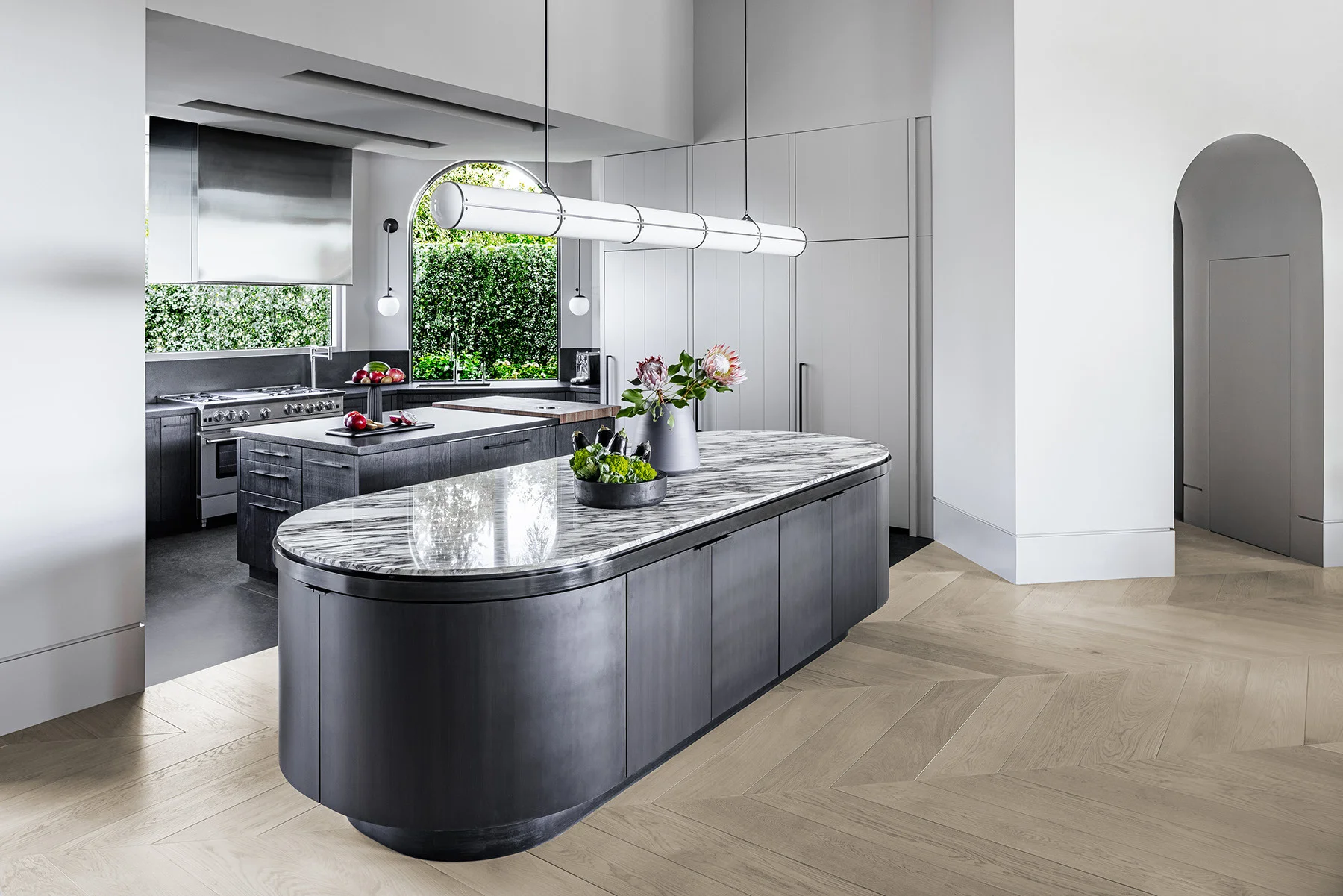
Why Does a Squeaky Wood Floor Happen, and How Do You Fix It?
A deep dive into why wood floors squeak, exploring the physics of timber friction, seasonal humidity, and the structural remedies that restore quiet luxury.
How Is Parquet Installed? Glue-Down vs Floating Floors
Demystify the choice between glue-down and floating parquet installations. Explore how these fitting methods impact acoustics, thermal efficiency, and longevity.