
Wood Floors in Kitchens and Bathrooms: What to Know
Which boards and finishes work around water, where wood should stop, and how to care for it.
Yes, you can have a wood floor in a kitchen, and in some bathrooms. What makes it work is a stable layered board rather than solid planks, a finish that keeps spills on the surface, careful installation at the edges, and the habit of wiping up water rather than leaving it. No real wood floor is waterproof, so the bathroom needs more care than the kitchen.
Here is what to choose, where wood works and where it does not, and how to look after it.
Can you put a wood floor in a kitchen?
A kitchen is a good place for wood. Most of what lands on the floor, crumbs, splashes, the odd drop of oil or wine, does no harm if it is cleaned up. Running the same floor from the living room into the kitchen also makes an open plan feel larger and calmer than a change to tiles at the threshold.
The real risks are leaks and standing water: a dishwasher that seeps, a sink that drips into the cabinet, a pet's water bowl. Check appliance connections, use a tray under the sink, and put a mat with a breathable backing in front of the sink, not a rubber-backed one that traps moisture.
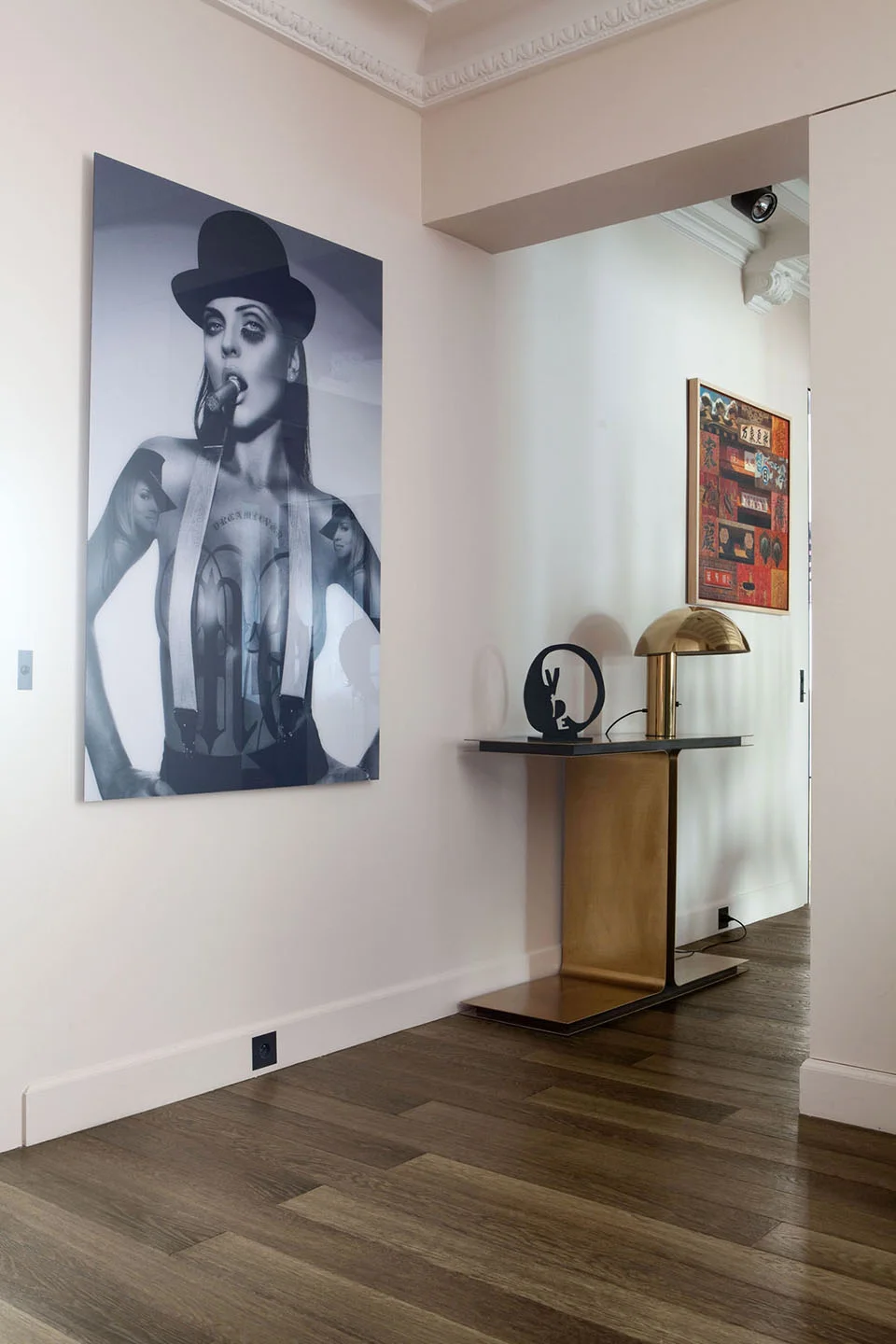
In this private apartment in Paris, laid in Droit, one straight oak floor runs through the living spaces, which is what most people want from a wood floor in an open kitchen.
Which wood floor works best in a kitchen?
- A layered board. A real wood top layer on a cross-laid core moves much less with steam and humidity than a solid plank.
- Oak. It is hard, and its pores are naturally blocked, which is why it has long been used for wine barrels. It takes up water more slowly than many other woods.
- A durable finish. Lacquer keeps spills on the surface and is easy to wipe; oil can be repaired patch by patch. Both work if they are maintained.
- Tight joints. Fine, tight joints give crumbs and water less to catch on than deep bevels.
- Matte rather than gloss. A low sheen hides water marks and small scratches far better.
Droit, a straight oak plank, fits that description: flatgrain select oak, 12 mm with a 4 mm top layer, 150 mm or 190 mm wide, in twelve lacquered colors, rated usage class 33 for heavy commercial traffic.
Can you use endgrain in a kitchen?
Endgrain is the hardest face of the wood and stands up to dropped pans and heavy traffic very well. It is also more absorbent than the face of a board, because you are looking at the open ends of the fibers, so the finish and prompt cleaning matter even more.
Cube, square blocks of endgrain oak, sets solid oak offcuts in an even grid: a 6 mm endgrain oak top layer on 10 mm birch plywood, rated usage class 34 for very heavy commercial traffic. Its joints are under 1 mm and can be filled with LignoFusion in brown or black, which closes them so dirt does not collect.
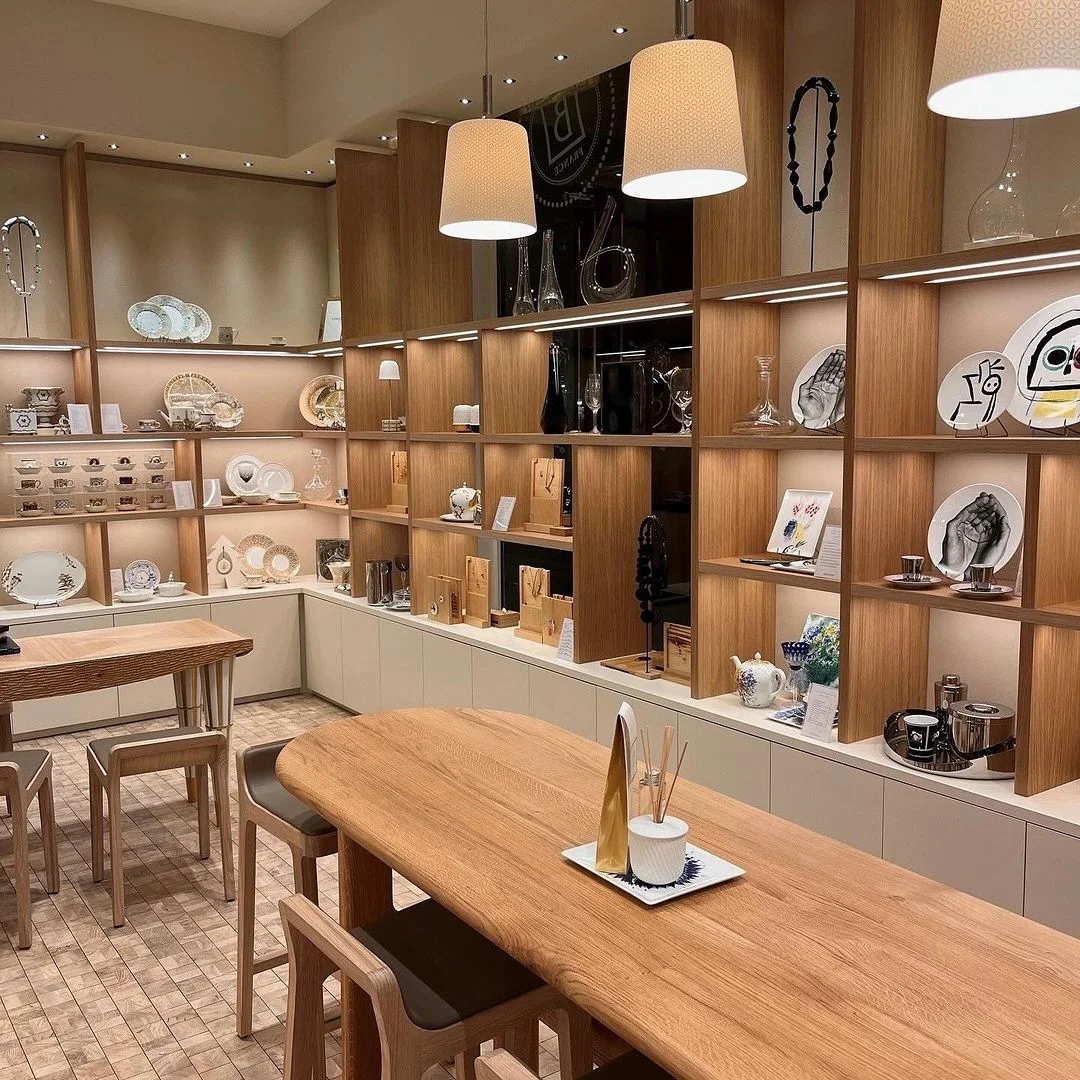
At Bernardaud in Bordeaux, laid in Cube Natural, the endgrain grid takes the daily traffic of a busy shop floor.
Can you have a wood floor in a bathroom?
Sometimes. A bathroom puts more stress on wood than a kitchen: humidity rises sharply with every shower, and water lands on the floor every day. Wood works when:
- the room is well ventilated, with an extractor fan that runs during and after showers;
- the shower has a tray or screen and the bath is used with care, so the floor is splashed rather than soaked;
- the boards are a layered construction, glued down, with the edges around the bath, the toilet and the walls sealed with a flexible sealant;
- water on the floor is wiped up rather than left to dry.
Wood is the wrong choice for wet rooms, walk-in showers without a tray, and family bathrooms where the floor is regularly flooded. A guest bathroom or a powder room is the easiest place to start. Where wood and water meet, many designers use stone or tile in the splash zone and wood for the rest of the room, with a flexible joint between the two.
Is there a waterproof wood floor?
No. Real wood always exchanges moisture with the air, and enough water will get into any wood floor eventually. Products sold as waterproof wood are vinyl or laminate with a printed wood image on a plastic or fiberboard core. They resist water but are not wood: they cannot be sanded and refinished, and they age differently.
A real wood floor can be made water-resistant, which is enough for a kitchen and for a carefully used bathroom: a good finish, sealed edges, a glued installation and a routine that keeps standing water off it.
How do you care for a wood floor in a kitchen or bathroom?
- Wipe up spills, especially water, as soon as they happen.
- Sweep or vacuum grit regularly; it scratches more than anything else.
- Clean with a damp, well-wrung mop and a cleaner suited to the finish. No steam mops, no soaking.
- Use felt pads under chairs and stools, and breathable mats rather than rubber-backed ones.
- Keep the room ventilated so humidity falls quickly after cooking or a shower.
- Refresh the finish when the busiest areas, in front of the sink and the stove, start to look dull.
Frequently asked questions
Can you put a wood floor in a kitchen?
Yes. A stable layered board with a durable finish works well in a kitchen, as long as spills are wiped up promptly and leaks from the sink or dishwasher are dealt with quickly. Many homes run the same wood floor from the living room through the kitchen.
Is wood flooring a good idea in a bathroom?
In a bathroom with good ventilation and a separate shower or bath, it can be, using a layered board, a glued-down installation and sealed edges, and keeping water off the floor. It is not suitable for wet rooms, walk-in showers without a tray, or floors that are regularly soaked. A guest bathroom or powder room is the easiest case.
Is there such a thing as a waterproof wood floor?
No. Real wood always takes up some moisture. Floors sold as waterproof wood are usually vinyl or laminate with a printed wood image. A real wood floor can be made water-resistant with the right finish and installation, but standing water should never be left on it.
Is oil or lacquer better for a kitchen wood floor?
Both work. A lacquer forms a film that keeps spills on the surface and is easy to wipe clean; if it wears through, a whole area is recoated. An oil soaks into the wood and can be refreshed one worn patch at a time, but needs topping up more often. Choose by how you want to maintain the floor.
How do you clean a wood floor in a kitchen?
Sweep or vacuum to remove grit, then use a damp, well-wrung mop with a cleaner suited to the finish. Avoid steam mops, soaking wet mops and harsh detergents, and wipe up spills, especially water and oil, as soon as they happen.
Kitchen and bathroom floors by OscarOno Paris
For kitchens and open-plan living, Droit straight oak boards come in 150 mm or 190 mm widths and twelve lacquered colors, usage class 33. For a hard-wearing endgrain floor, Cube is endgrain oak in Natural, Smoke or Black, usage class 34, with optional LignoFusion joint filling. Both carry a Cfl-s1 fire rating and are FSC and PEFC certified.
Test a finish against water and your kitchen light at home: order samples, and find spec sheets, CAD and 3D files in the library.
More from the Atelier
Protecting End Grain Wood Block Flooring from UV Fading
Discover the science of oak photodegradation and how to protect end-grain wood floors from UV fading using advanced varnishes and architectural design.

Parquet Floor Restoration: Is an Old Parquet Floor Worth Saving?
Loose blocks, gaps, stains and a worn finish can all be put right. How to tell whether an old parquet floor is worth restoring, what the work involves, and when it is not.
Squeaky Wood Floors: Why They Squeak and How to Fix Them
A squeak is friction: wood on wood, wood on a nail, or a subfloor moving on its joists. Find which one it is and the fix follows.