
Wood in Art: How Timber Shapes Sculpture and Installation
Exploring the profound dialogue between master sculptors and the living medium of wood.
Wood in art represents a profound collaboration between human expression and the living, structural memory of nature. From intimate hand-carved wood sculptures to monumental site-specific timber installation art, artists utilize the material's grain, texture, and organic history to critique industrialization, map ecological time, and test the physical laws of gravity. By treating wood as an active collaborator rather than a passive substrate, creators reveal the poetic tension between nature and the built environment.
- A living, chronological archive: Artists use wood to reveal historical and biological time, carving away growth rings to expose the saplings preserved within ancient timber.
- Monumental scale and industrial contrast: Visionary sculptors combine uniform, milled timbers with aggressive hand-carving to bridge the gap between architectural geometry and natural forms.
- Gravity-defying structural balance: Modern master carvers rely purely on the natural weight, density, and interlocking grain of logs to build complex, fastener-free assemblages.
- Repurposed architectural memory: Weathered, discarded plywood and construction timber are transformed into fluid, root-like installations that challenge rigid gallery spaces.
What is the history of wood in art?
The history of wood in art spans from ancient sacred totems and medieval religious carvings to the modern era's abstract sculptures and immersive architectural installations. Over millennia, artists have transitioned from treating timber as a cheap, utilitarian substrate to celebrating its natural defects, growth rings, and unpredictable structural behavior as active partners in the creative process. While classical traditions often sought to mask the material under layers of plaster, paint, or gilding, modern and contemporary movements deliberately expose the raw grain, cracks, and knots to honor the timber's organic origins.
During the twentieth century, the rise of modernism prompted sculptors to explore the concept of direct carving, a method that respects the natural limitations and direction of the wood grain. This philosophy allowed the inherent character of different wood species—such as the rich warmth of walnut, the pale uniformity of maple, or the coarse texture of oak—to dictate the final sculptural form. Today, wood in art has expanded beyond the gallery pedestal into massive, site-specific timber installation art that challenges our relationship with natural resources and architectural space.
How do wood artists negotiate with the medium?
Contemporary wood artists negotiate with timber by aligning their physical interventions with the material's inherent grain, internal moisture, and structural tension. Instead of forcing a predetermined shape onto the wood, sculptors engage in a direct dialogue with the log, allowing natural knots, checks, and grain patterns to guide their chisels. This process requires an intimate understanding of wood anatomy, as carving against the grain can split the timber, while working with it preserves structural integrity.
A master of this direct physical dialogue was the late American sculptor Thaddeus Mosley, who passed away in March 2026 at the age of 99. Mosley hand-carved local felled logs—predominantly walnut, cherry, and sycamore—using only a mallet and gouge. Through Mosley's signature technique, he created abstract, interlocking organic forms that were assembled entirely without screws, nails, or glue. His works rely purely on gravity, natural weight, and the precise physical balance of the timber, turning massive logs into seemingly weightless, dancing columns.
How is timber installation art transforming modern spaces?
Timber installation art transforms modern spaces by disrupting rigid architectural grids with fluid, organic forms that challenge our perception of built environments. By scaling up wood sculpture into immersive, site-specific environments, artists create powerful sensory encounters where the scent, texture, and structural mass of timber completely redefine interior volumes. These grand installations force visitors to confront the raw materiality of wood in spaces typically dominated by drywall, steel, and glass.
The Brazilian artist Henrique Oliveira exemplifies this architectural transformation through his massive, site-specific works. Oliveira utilizes tapumes—weathered, peeling plywood construction hoardings salvaged from the streets of São Paulo—to construct parasitic, root-like structures. In his landmark installation Baitogogo at the Palais de Tokyo in Paris, these discarded timber skins seem to burst dynamically from the gallery's rigid concrete columns, weaving together into a dense, chaotic web of faux-roots that blurs the boundary between architecture and nature.
In a similarly powerful scale, sculptor Ursula von Rydingsvard creates emotionally charged, monumental works by laminating uniform, milled 4x4 cedar beams. She then aggressively carves, hacks, and scores the built-up structures with circular saws and chisels to evoke eroded rock formations or ancient tree trunks. By rubbing powdered graphite into the deep, fresh grooves, von Rydingsvard creates a dark, metallic, stone-like patina that contrasts beautifully with the warm, aromatic presence of the cedar wood.
How does Giuseppe Penone reveal the living archive of wood?
Giuseppe Penone reveals the living archive of wood by carving away the outer layers of industrial timber beams to expose the young sapling preserved at their core. His landmark Alberi (Trees) series treats wood as a chronological record of ecological time, revealing how the tree grew decade by decade before it was harvested. By treating the industrial beam as a block of stone containing a hidden figure, Penone reverses the human manufacturing process to restore the timber's natural history.
Penone’s meticulous process involves tracing a single growth ring down the length of a commercial square beam, carefully bypassing knots—which are the bases of ancient branches—to peel back the younger layers of wood. Through Giuseppe Penone's natural interventions, the industrial commodity is transformed back into a slender, delicate tree trunk complete with its original branches. This artistic act highlights that every piece of timber, no matter how processed, retains the memory of its biological life and its relationship with the sun, wind, and soil.
Wood Sculpture vs. Timber Installation Art: What is the difference?
The difference between wood sculpture and timber installation art lies primarily in scale, spatial interaction, and viewer experience. While wood sculpture refers to self-contained, three-dimensional objects carved from single logs or assembled elements, timber installation art comprises site-specific, immersive environments designed to transform entire architectural spaces. Sculptures invite viewers to look at them, whereas installations invite viewers to step inside them.
| Characteristic | Wood Sculpture | Timber Installation Art |
|---|---|---|
| Scale & Scope | Handheld to monumental, self-contained objects | Immersive, large-scale, site-specific environments |
| Primary Materials | Solid felled logs (walnut, cherry, cedar, oak) | Reclaimed plywood, structural beams, industrial offcuts |
| Spatial Relationship | Placed within a room; viewed from the exterior | Intervenes with architecture; viewers walk through or around |
| Structural Joinery | Direct carving, joinery, gravity-based balancing | Scaffolding, steel armatures, structural lamination |
| Core Philosophy | Form, mass, and natural grain negotiation | Architectural disruption, ecological decay, scale |
Why does timber remain a vital medium for modern creators?
Timber remains a vital medium for modern creators because it possesses a unique material warmth, olfactory presence, and carbon-storing capability unmatched by synthetic alternatives. As contemporary design shifts toward biophilic principles, the tactile reality of raw grain, chiseled facets, and natural timber patinas provides a necessary sensory anchor in an increasingly digital world. Wood is not merely a material; it is a medium that holds the warmth of human touch and the slow passage of time.
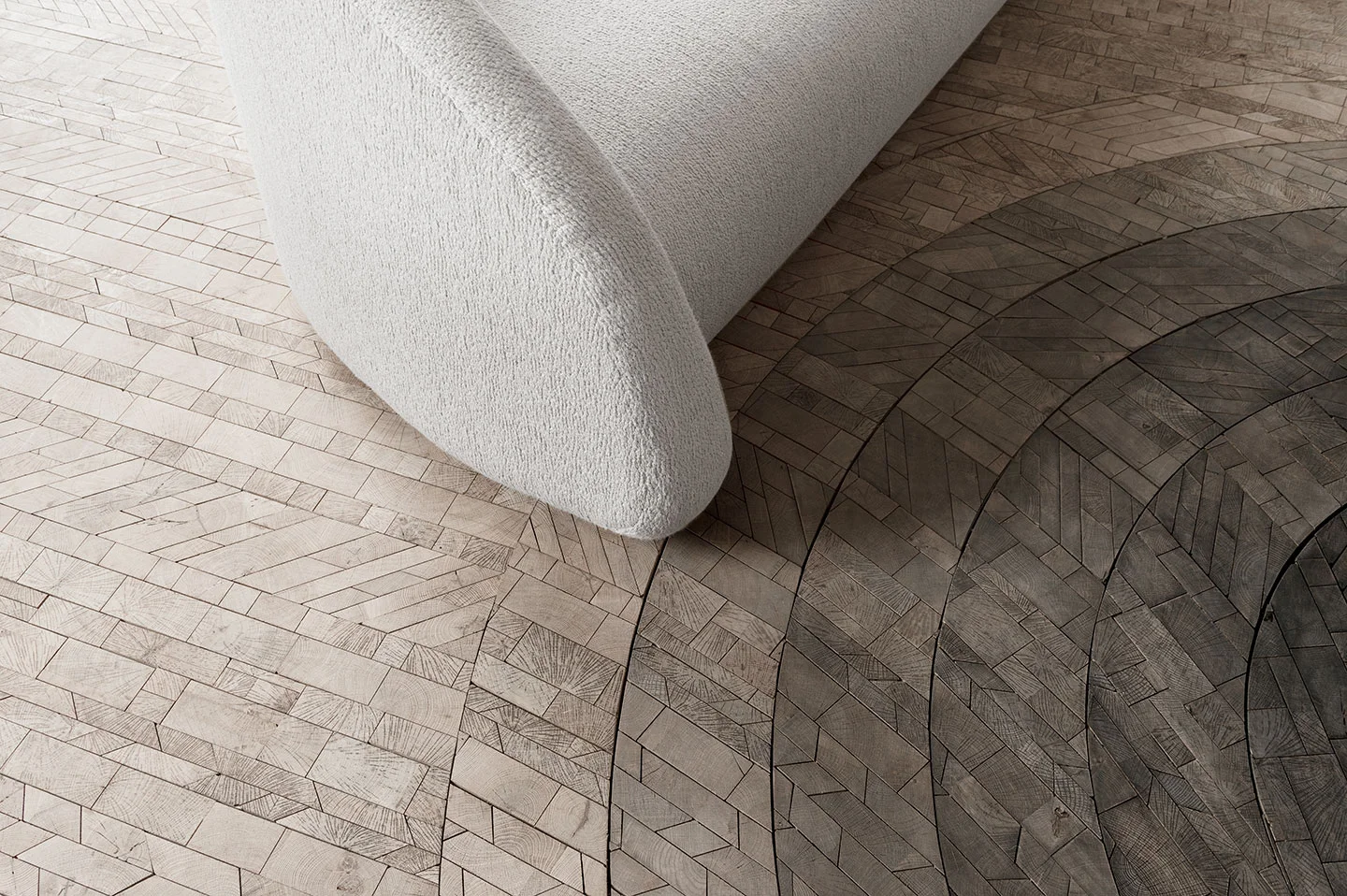
This deep respect for the organic, unpredictable beauty of wood grain is shared by master artisans and contemporary designers alike. The same dialogue between hand-craftsmanship and the natural properties of timber that guides famous sculptors also inspires the creation of bespoke architectural surfaces. Whether carved into a gallery masterpiece or laid as an expressive end-grain floor, wood connects us directly to the natural world, retaining its living character for generations to come.
Frequently Asked Questions about Wood in Art
What are the best wood species for wood sculpture?
The best wood species for wood sculpture include walnut, cherry, oak, and cedar. Hardwoods like walnut and oak offer incredible durability and rich, expressive grain patterns, while softer woods like cedar are favored for their aromatic qualities and ease of hand-carving on a monumental scale.
How do artists prevent wood sculpture from cracking over time?
Artists prevent wood sculptures from cracking by slow-drying the timber to stabilize its internal moisture content before carving. Additionally, many sculptors embrace natural cracking (known as checking) as an authentic expression of the wood's organic movement and adaptation to its environment.
What is the significance of wood in the Arte Povera movement?
In the Arte Povera movement, wood was utilized to challenge the commercialized art world by using common, organic materials. Artists like Giuseppe Penone used timber to explore the relationship between human culture and the natural world, highlighting biological time over industrial production.
More from the Atelier
Calm Bedroom Design: How Wood Floors Create Restful Interiors
Learn how natural wood bedroom floors, acoustic balancing, and soft timber textures combine to transform your bedroom into a quiet, restorative sanctuary.
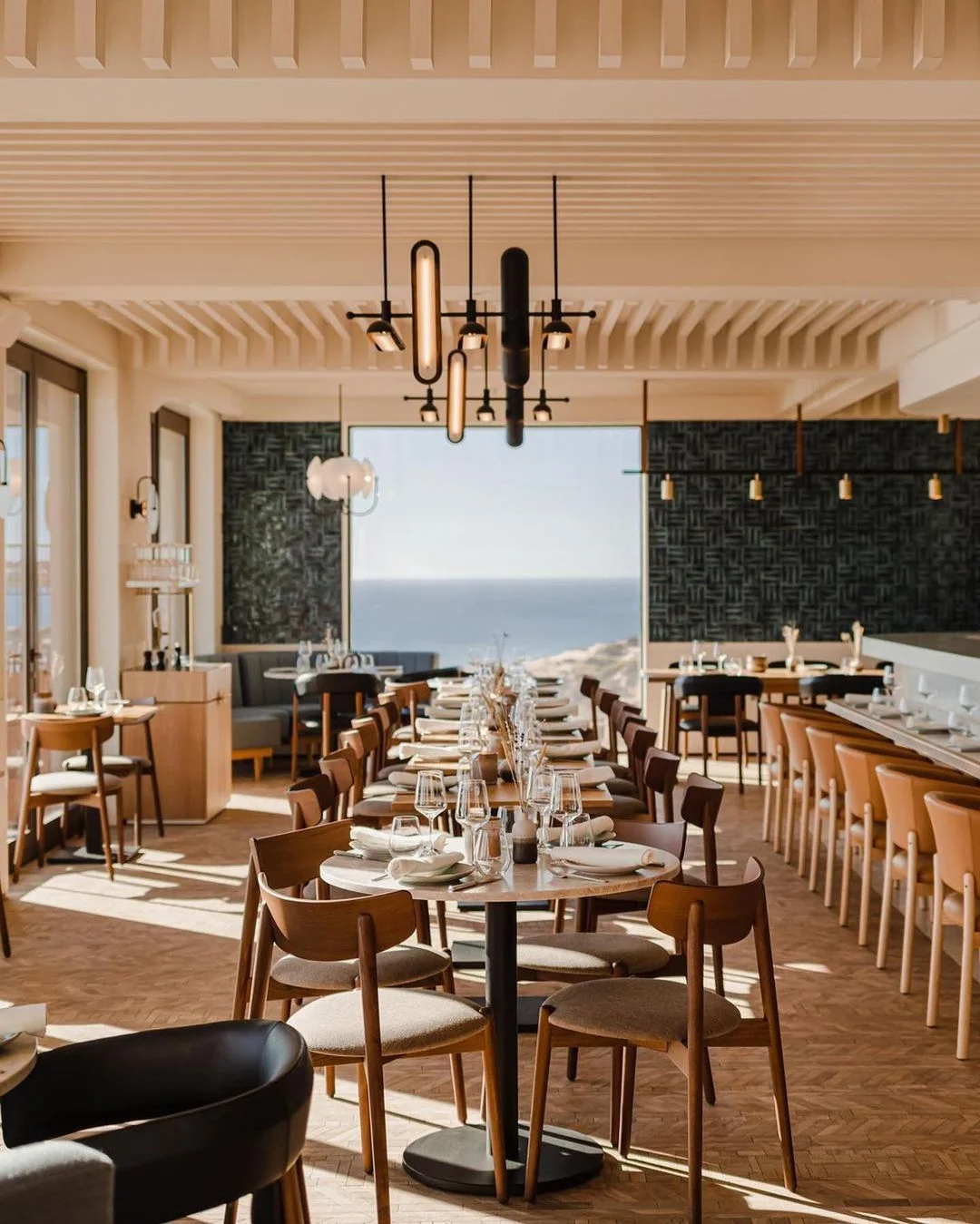
Summer Light & Organic Grids: Coastal Sanctuaries
Discover how the raw, organic grids of end-grain wood and pale timber tones ground bright, modern seaside properties into peaceful sensory retreats.
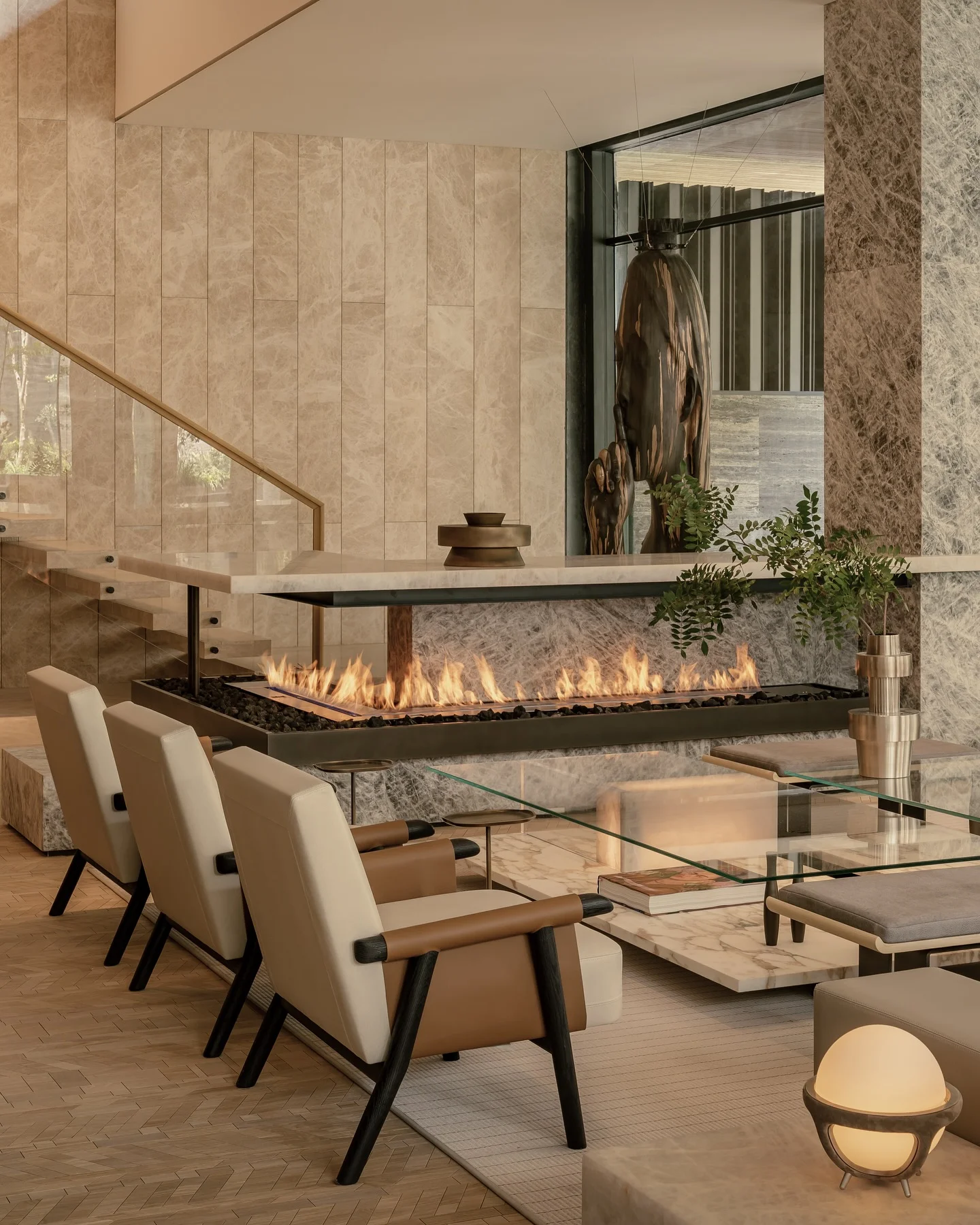
Minimalism and Wood: Doing More with Less Material in Design
Discover how warm minimalism replaces stark white spaces with tactile timber. Learn how a monomaterial approach creates serene, acoustically quiet luxury.