
Light Oak Flooring: How Daylight Changes a Pale Oak Floor
A pale oak floor is the biggest reflector in the room. Choose it for the light it will actually get.
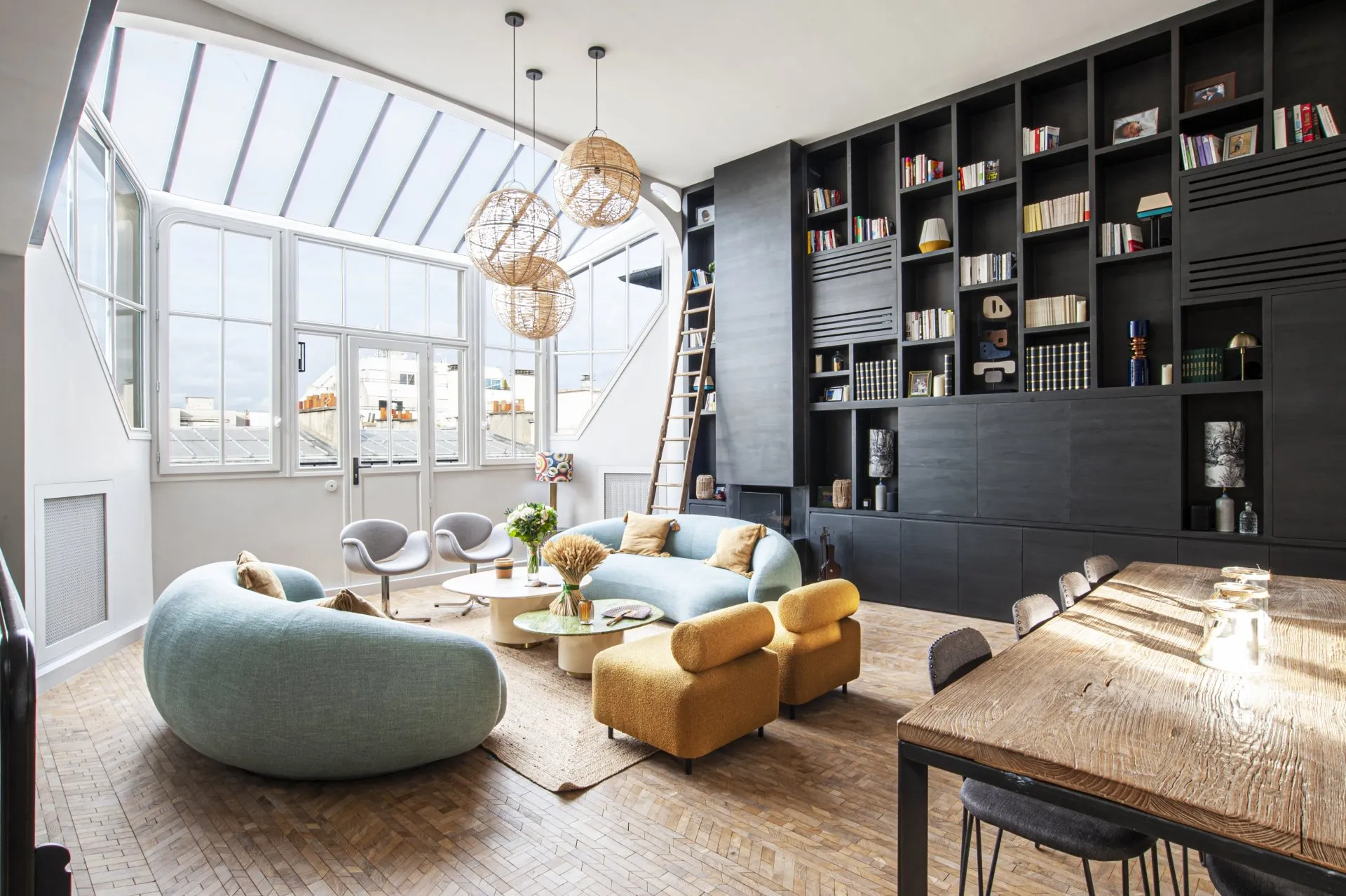
Light oak flooring is oak in a pale tone: either naturally light oak under a clear finish, or oak given a pale colored finish. Because it is the largest light-colored surface in most rooms, it changes with the daylight more than anything else: cool and silvery in a north room, golden in late sun, flat at midday and textured when light rakes across it. Choosing well means looking at the floor in the light it will actually get, at the sheen as much as the color, and expecting a natural oak to warm slightly over its first years.
Why is light oak flooring so popular?
A pale floor bounces daylight deeper into a room, so rooms feel bigger and brighter, and it suits the calm, natural interiors that have dominated for years, from Scandinavian to Japandi. It also hides light dust and pet hair better than a dark floor. Light, natural and French or European oak are among the fastest-growing flooring searches, for the same reasons.
How does daylight change a light oak floor during the day?
In the morning, low sun rakes across the floor and picks out every bit of grain and texture, with long shadows from furniture. At midday the light comes from high above, shadows shorten and the floor looks flatter and closer to its true color. Late in the day the light turns warm and low again, and a pale oak floor takes on a honey tone it does not have at noon.
That is why a sample seen once, in a showroom, tells you little. The same board can look almost gray at 9 a.m. in a north room and golden at 6 p.m. in a west room.
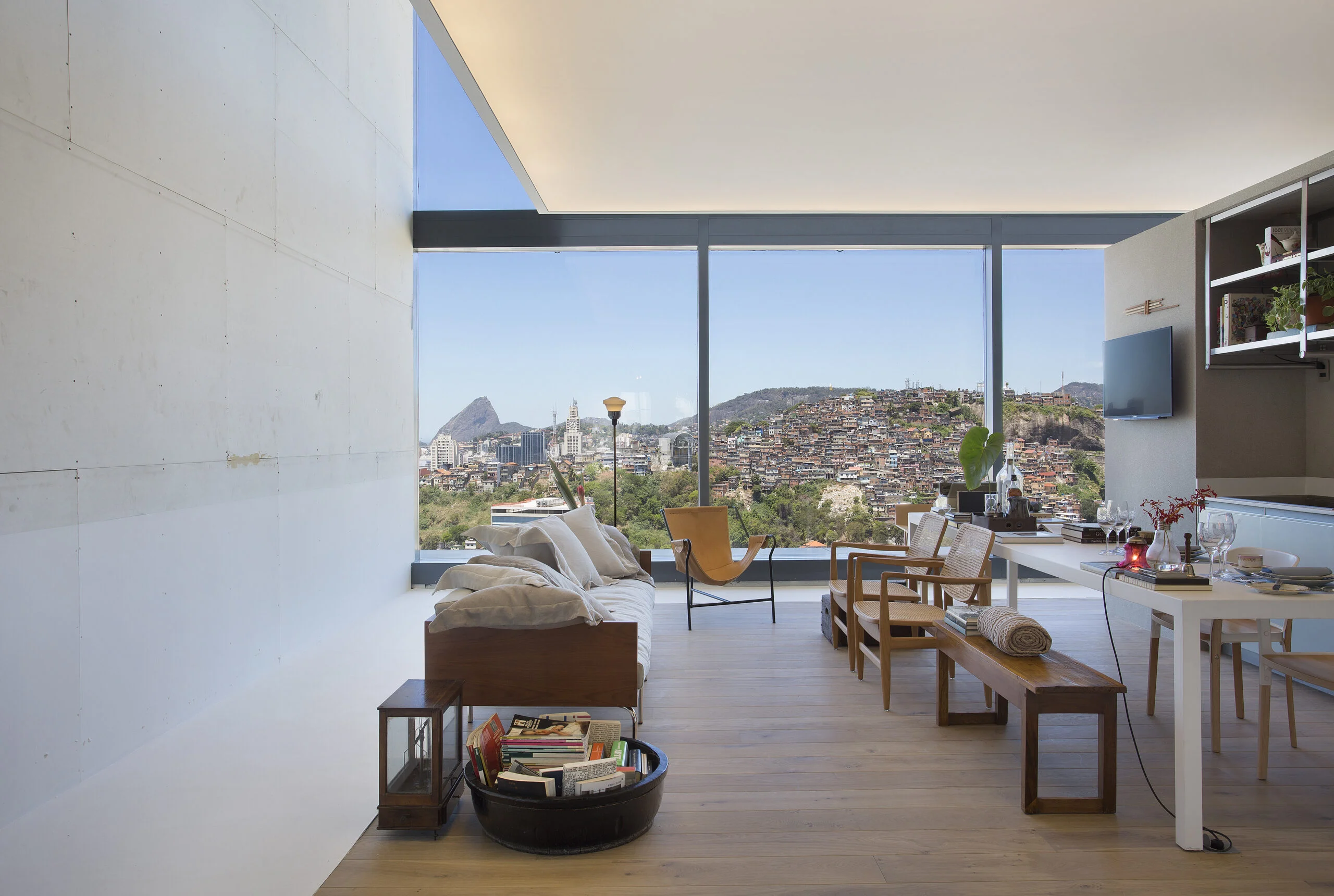
At CASACOR, pale Droit straight oak boards run toward a full-height window, and the floor carries the daylight back into the room.
How does room orientation affect a pale oak floor?
North-facing rooms (in the northern hemisphere) get steady, cool, indirect light. A very cool, gray or white-washed floor can look cold and flat there; a light oak with some warmth in it keeps the room inviting.
South- and west-facing rooms get strong, warm, direct sun. Almost any pale oak looks good in that light, but it also does the most to change the color of the wood over time, so plan for sun from the start: filter the light, choose a finish that does not yellow, and see how to slow sun fading.
East-facing rooms are bright and cool in the morning and soft for the rest of the day; they flatter mid-pale tones.
Matte or glossy: which sheen suits light oak?
Matte or satin, in most rooms. A glossy surface reflects windows and lamps as bright patches, which hides the grain and shows every scratch and footprint in raking light. A low-sheen finish scatters the light, so the floor reads as wood rather than as a reflection. On a pale floor in a sunny room, the difference is large.
Does endgrain look different from plank in daylight?
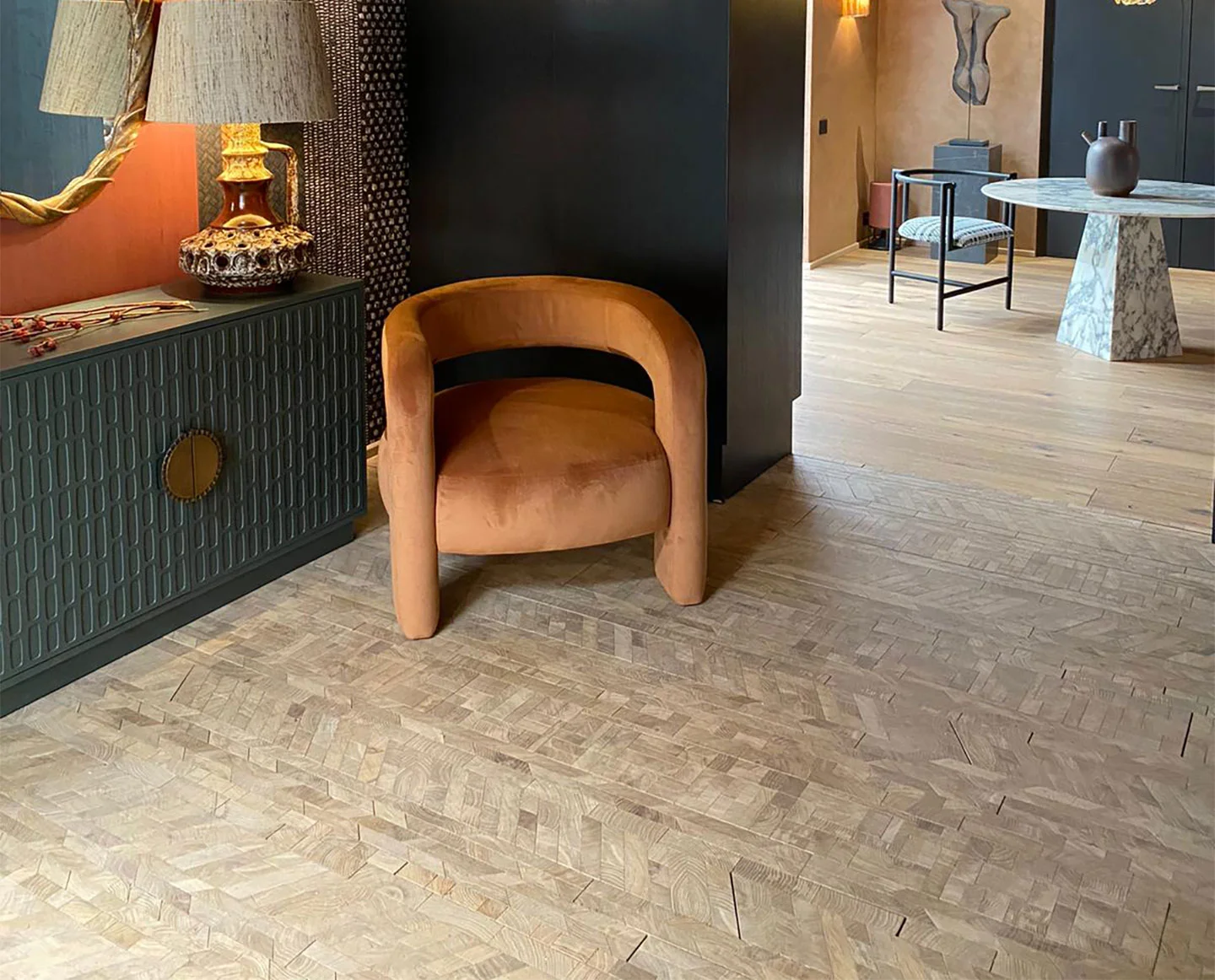
Yes. On a plank, light runs along the grain and the floor reads as long, even lines. On endgrain, you look into the ends of the fibers: the surface shows growth rings, takes in more light and reads deeper and more textured than the same oak cut as a board. Forêt, built from six planks and six patterns in endgrain oak, in its Natural finish keeps the oak's own pale color but gives it that depth.
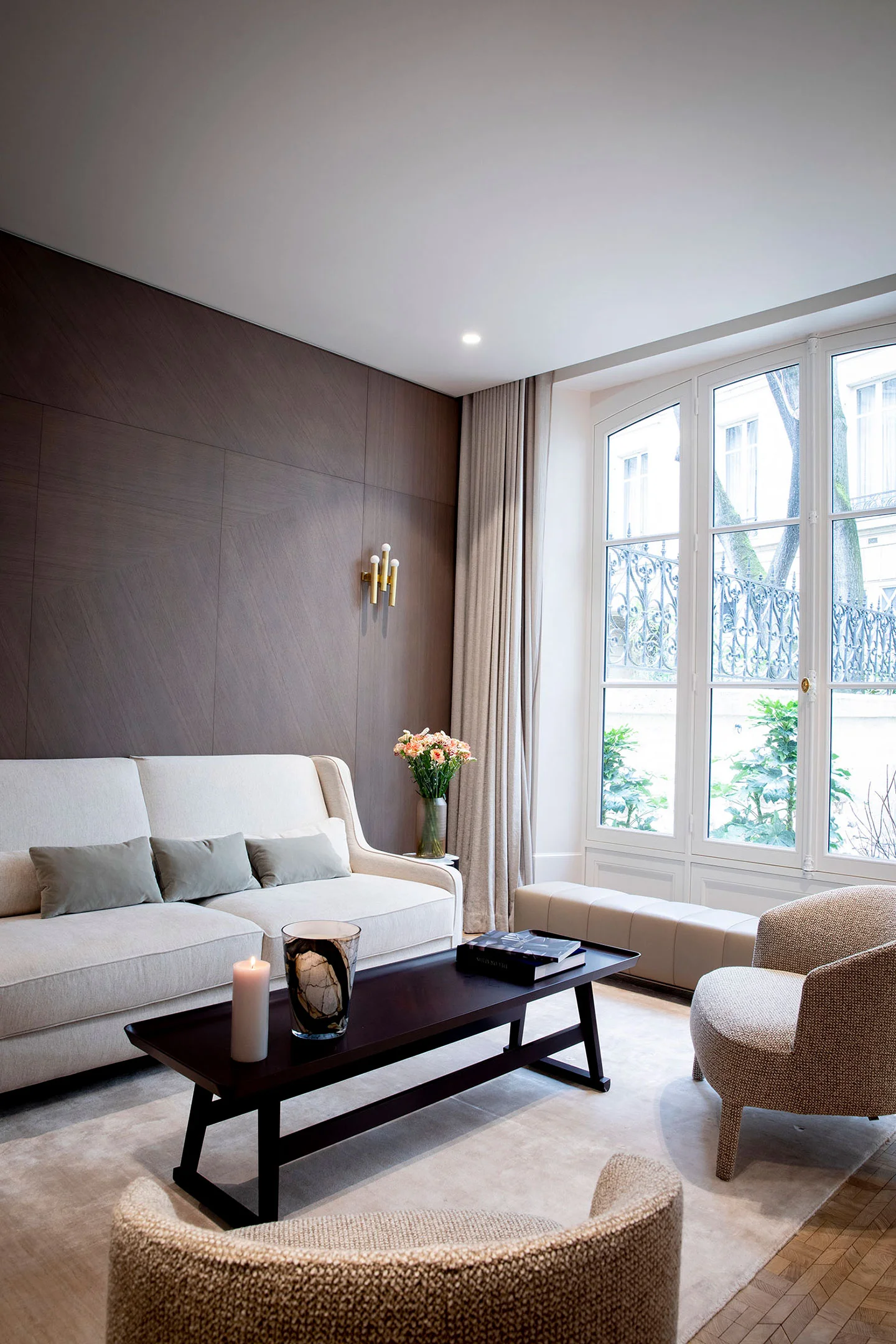
In this private residence in Paris, Forêt Natural sits under tall French windows: the light shows the endgrain texture without making the floor look dark.
How do you choose a light oak floor?
Get samples large enough to judge, lay them on the floor where they will go, and look at them in the morning, at midday and in the evening, with the room's lights on as well. Look at them next to your wall color and your largest pieces of furniture. If two tones look almost the same, choose the warmer one for a north room and the cooler one for a sunny one, and remember that natural oak warms a little in its first years.
Frequently asked questions
Does light oak flooring turn yellow?
Natural oak warms toward honey in sunlight, especially in its first years, and some finishes amber as they age. A non-yellowing finish, UV filtering at the windows and a pale colored finish all slow the change, but a natural oak floor in a sunny room will always deepen slightly.
Is light oak flooring good for north-facing rooms?
Yes, as long as the tone has some warmth. North light is cool and steady, so very gray or white-washed floors can look cold there. A light oak with a warm undertone keeps the room bright without feeling flat.
Does light oak flooring show dirt?
It hides light dust, pet hair and small scratches better than a dark floor, which shows every pale speck. It shows dark marks and spills more clearly, so clean those promptly and keep mats at the entrances.
Should a light oak floor be matte or glossy?
Matte or satin in most rooms. Gloss reflects windows and lamps as bright patches and shows scratches in raking light, while a low sheen scatters the daylight and lets the grain show.
Does endgrain oak look darker than plank oak?
It reads deeper and more textured, because you see the ends of the fibers and the growth rings, which take in more light. In a natural finish it keeps the oak's pale color, but the surface has more depth than a plank of the same oak.
Light oak floors by OscarOno Paris
Droit is the straight oak board, flatgrain select oak, 12 mm with a 4 mm top layer, 150 mm or 190 mm wide, in twelve lacquered colors that run from very pale to dark; usage class 33. Forêt in Natural gives pale oak the depth of endgrain, with an 8 mm endgrain oak top layer on 12 mm birch plywood; usage class 34. Both carry a Cfl-s1 fire rating and are FSC and PEFC certified.
Order samples and look at them in your own light through a whole day, and find spec sheets, CAD and 3D files in the library.
More from the Atelier
Wood Floors in the Bedroom: How to Choose a Calm, Quiet Floor
Wood is warm underfoot, easy to keep dust-free and lasts for decades in a low-traffic room. How to choose the color, finish, layout and acoustics of a bedroom floor.
Light Oak Flooring for Bright, Sunlit and Coastal Rooms
Pale oak suits sunlit and seaside rooms, if you get the finish right. How light oak changes in the sun, and what sand, humidity and glare mean for it.
Wide Plank Oak Flooring for a Minimalist Interior
Fewer joints, a clean grade, a low sheen and one direction through the house: how to choose wide plank oak for a minimalist interior, and when an end grain grid does the job better.