
When to Refinish Hardwood Floors: Signs, Sanding and Finishes
Most worn floors need a fresh coat of finish, not a sander. A drop of water tells you which.

Refinish a hardwood floor when the finish has worn through to bare wood: when water darkens the wood instead of beading on it, when traffic lanes turn gray, or when scratches and stains go into the wood itself. A floor that is only dull or scuffed, with its finish still intact, needs a fresh coat of finish, not a sander.
The difference matters, because a recoat removes no wood and a full sanding does. A floor can be recoated many times, but sanded only as often as its wood allows.
Does your floor need refinishing? The water test
Put a few drops of water on the busiest part of the floor, such as a doorway, the path to the kitchen, or in front of the sofa, and watch:
- The drops bead and sit there. The finish is intact. Clean the floor; at most it needs a recoat to restore its sheen.
- They soak in slowly and darken the wood within a few minutes. The finish is thin. Recoat soon, before it wears through.
- They soak in at once and leave a dark spot. The wood is bare there. That area needs sanding and a new finish, and the sooner the better, because bare wood takes up dirt and water.
Other signs point the same way: gray or blackened patches where the wood has been exposed, scratches you can catch with a fingernail that have gone through the finish, and stains that have soaked in rather than sitting on top.
Refinish, recoat or just clean?
| What you see | What it needs |
|---|---|
| Dull surface, fine scuffs, finish intact | A thorough clean, then a recoat if the sheen does not come back |
| Finish thin in traffic lanes, wood not yet bare | A recoat: light abrasion and a fresh coat of lacquer, or a maintenance oil on an oiled floor |
| Bare, gray or stained wood in places | Sanding and refinishing, at least of those areas |
| Deep scratches, dents, water stains across the floor | A full sanding and a new finish |
| You want a different color | A full sanding back to bare wood |
On an oiled floor, worn patches can usually be cleaned and re-oiled on their own and blend in. On a lacquered floor, once the lacquer has worn through, a professional normally sands lightly and recoats so the new coat bonds evenly.
How often do hardwood floors need refinishing?
There is no fixed schedule. A floor in a quiet bedroom may go many years without needing more than cleaning, while a hallway, a kitchen or a shop floor wears much faster. Judge by the water test, not by the calendar: sanding a floor whose finish is still sound only uses up wood.
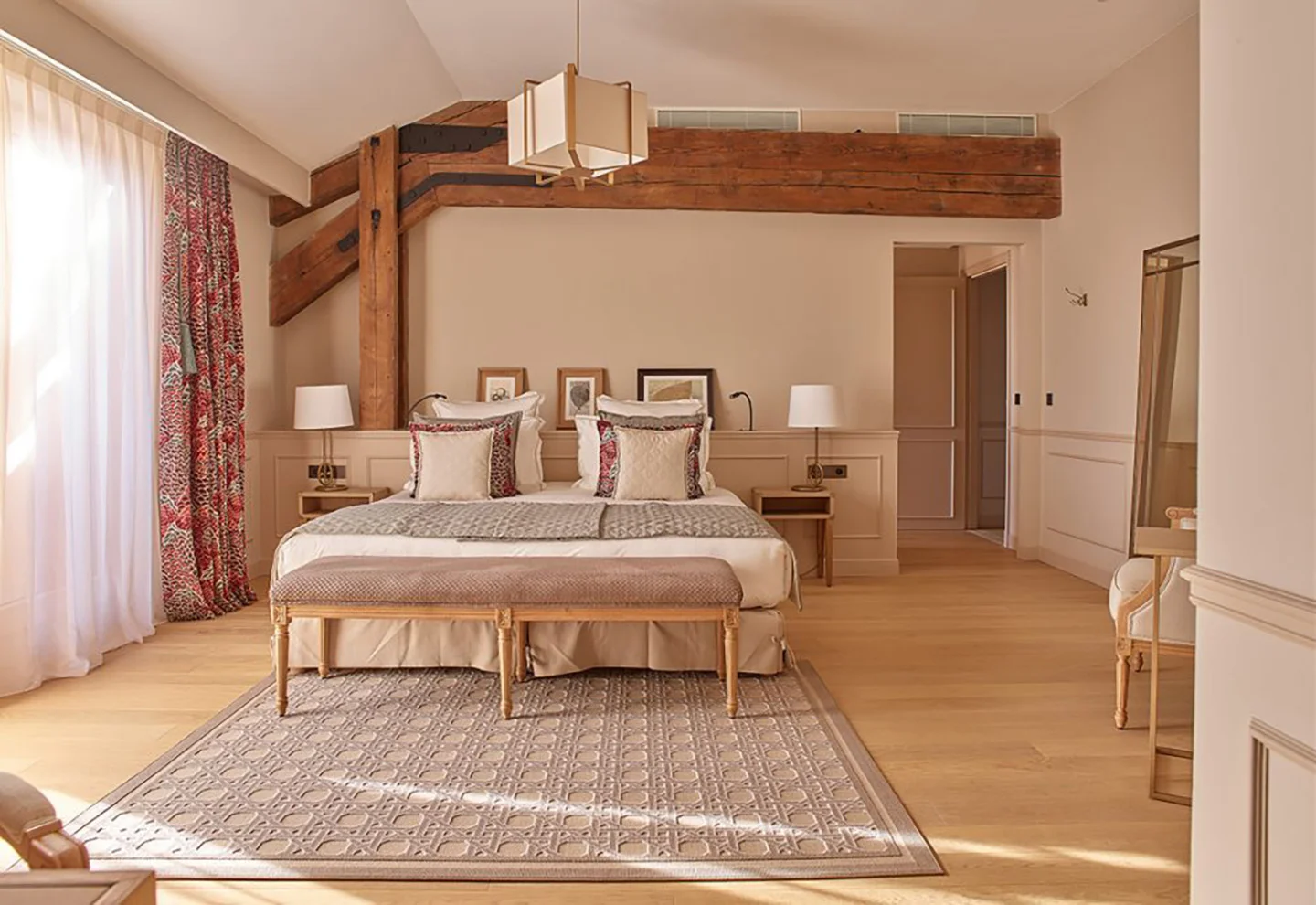
Hotel floors such as Hotel Chais Monnet in Cognac, laid in Droit, take far more traffic than a home, which is why the finish, and how it is renewed, matters as much as the wood.
How many times can a wood floor be sanded?
As many times as there is wood above the tongue and groove to sand into. Each full sanding removes a little. A solid floor has the most to give; a layered floor has as much as its oak top layer; a very thin veneer may not take a full sanding at all and can only be recoated.
So before you sand, find out what you have. Lift a block or board at a threshold or a vent, or check the spec sheet. Droit, OscarOno Paris's straight oak board, has a 4 mm oak top layer on a 12 mm board; Opus, the endgrain floor, has an 8 mm oak top layer on 12 mm birch plywood.
What does sanding and refinishing involve?
The room is emptied, and the floor is sanded in stages, from a coarse abrasive that takes off the old finish and the damage, through medium to fine, which leave the surface smooth. Edges and corners are done with smaller machines. A good fitter uses dust extraction and vacuums thoroughly between stages, because any dust left behind ends up in the finish.
Then comes the finish, in several thin coats: an oil or hardwax oil that soaks into the wood, or a lacquer that forms a film on top. The floor can usually be walked on carefully soon after, but rugs and furniture should wait until the finish has fully cured; follow the finish maker's times.
Can you sand an end grain floor?
Yes, but it is a job for someone who has sanded end grain before. An end grain floor shows the ends of the wood fibers at the surface, the way a butcher's block does, so it behaves differently under a sander than a plank floor and needs a gentler, more careful approach. The reward is that end grain is very hard wearing to begin with, which is why Opus is rated usage class 34, for very heavy commercial traffic.
Color is the other question. On Opus, Smoke is smoked through the full depth of the oak rather than stained on the surface, so wear does not uncover a paler layer underneath. Check the spec sheet and the maintenance guidance for the finish you have before any sanding.
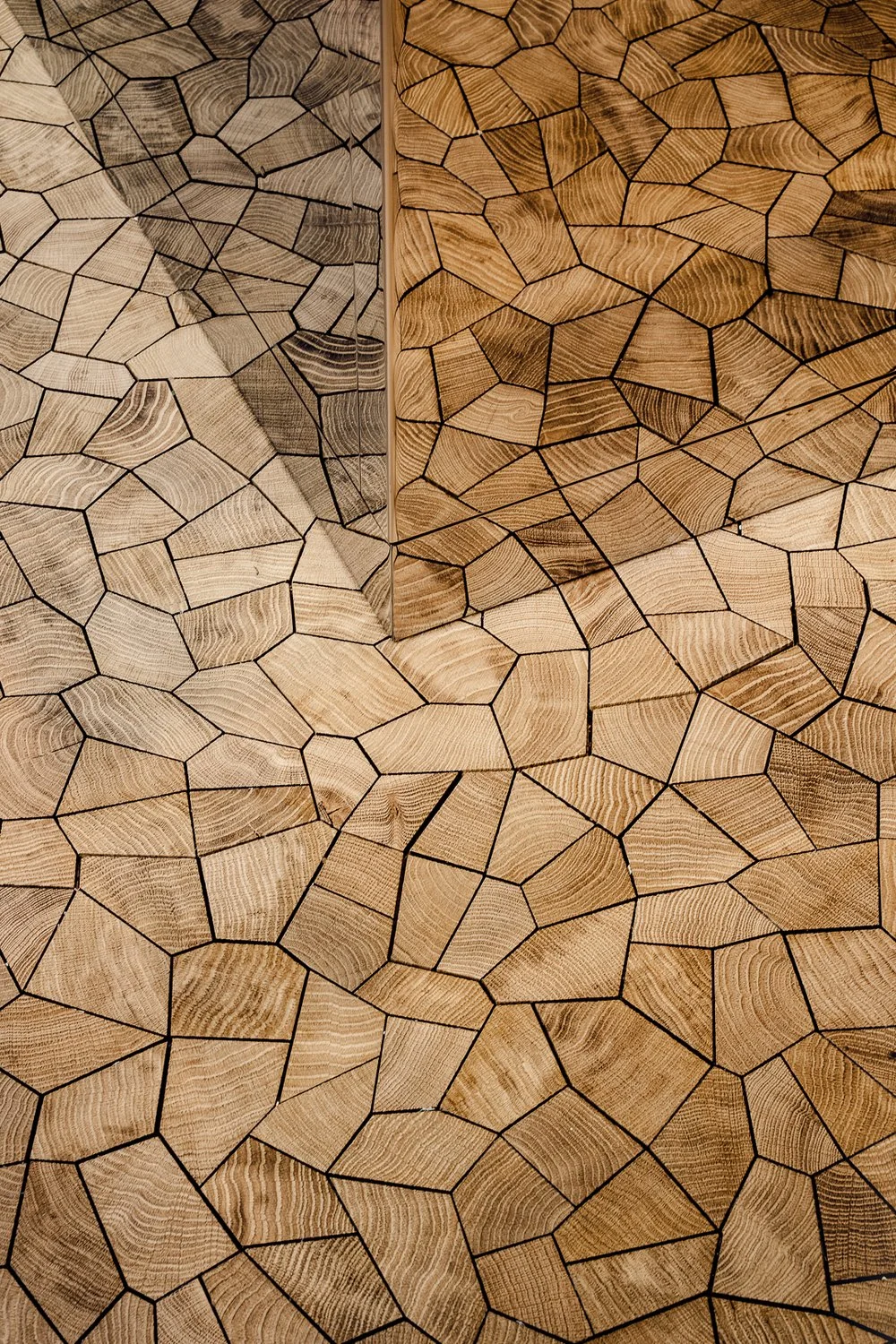
At the Butterfly Pâtisserie of the Hôtel de Crillon in Paris, laid in Opus, natural endgrain oak takes the traffic of a busy hotel shop.
How do you put off refinishing?
Most wear comes from grit. Mats at the entrances, felt pads under chairs, and regular dry cleaning with a soft brush or vacuum do more to protect a finish than anything else. Wash with a barely damp mop and a pH-neutral cleaner, never a wet one, and recoat when the water test says the finish is getting thin. Our floor care routine covers it step by step.
Frequently asked questions
How do I know if my hardwood floor needs refinishing?
Put a few drops of water on the busiest part of the floor. If they bead, the finish is intact and the floor only needs cleaning or a recoat. If they soak in and darken the wood within a few minutes, the finish is thin. If they soak in at once, the wood is bare in that spot and the floor needs sanding and refinishing there.
What is the difference between recoating and refinishing?
Recoating adds a fresh coat of finish over the old one after a light abrasion or, on an oiled floor, a maintenance oil; no wood is removed. Refinishing means sanding the floor back to bare wood and applying a new finish from scratch. Recoating is quicker, cheaper and can be done many times; refinishing uses up some of the wood.
How many times can you refinish a hardwood floor?
It depends on how much wood there is above the tongue and groove. A solid floor has the most; a layered floor has as much as its top layer; a thin veneer may not take a full sanding at all. Each sanding removes a little, so check the thickness before you start, and recoat rather than sand whenever the wood is not bare.
Can you sand and refinish an end grain floor?
Yes, with care and by someone who has done it before. End grain presents the ends of the wood fibers at the surface, so it sands differently from a plank floor. Opus, OscarOno Paris’s endgrain floor, has an 8 mm oak top layer; check the spec sheet and the maintenance guidance before any sanding.
Refinishing an OscarOno Paris floor
Droit is flatgrain select oak, 12 mm with a 4 mm oak top layer, lacquered in twelve colors and rated usage class 33. Opus is endgrain oak, 12 mm birch plywood with an 8 mm oak top layer, in Natural, Smoke or Black, rated usage class 34. Both carry a Cfl-s1 fire rating and are FSC and PEFC certified. Spec sheets with the construction details are in the library, and you can order samples to see the finishes before you choose.
More from the Atelier
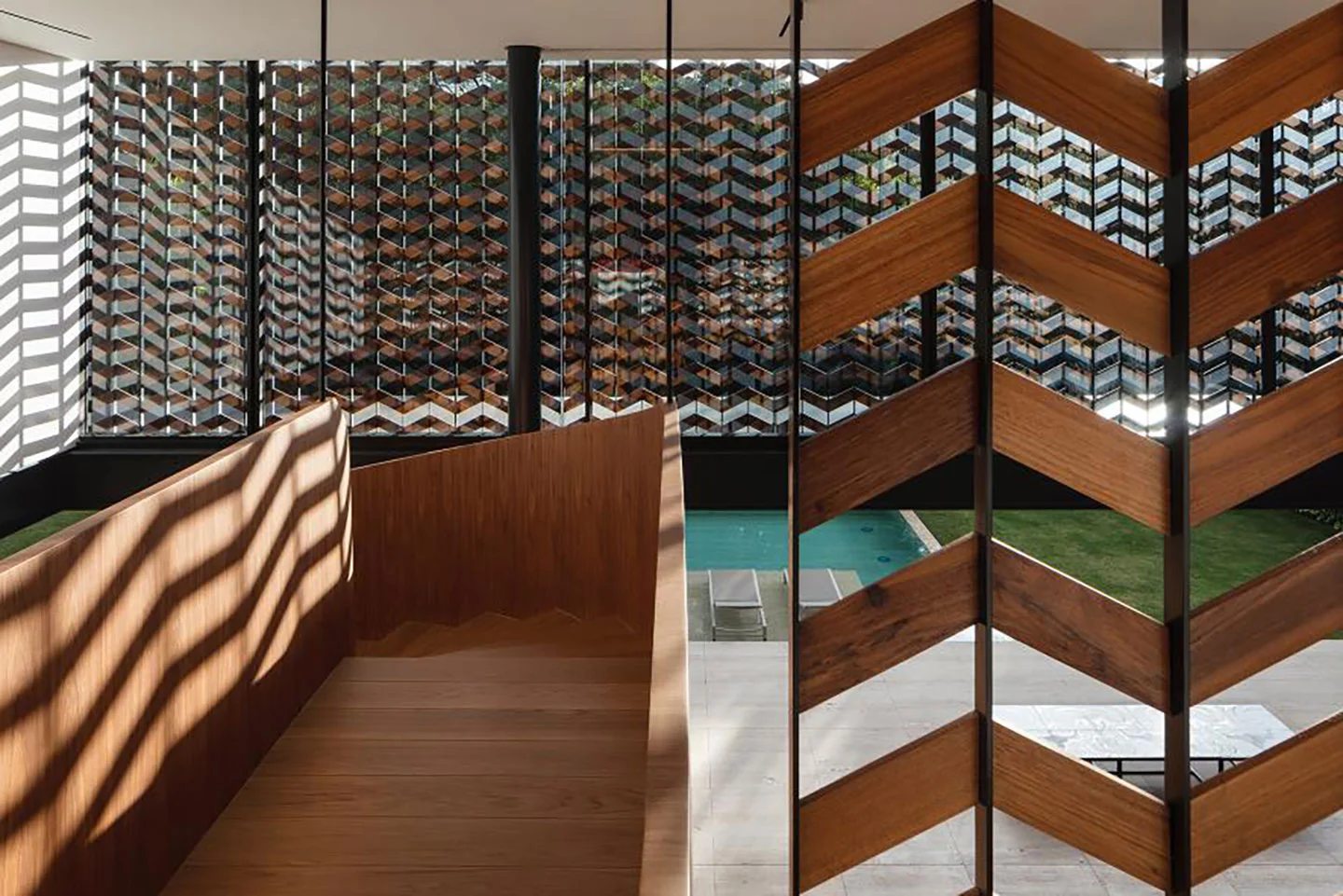
Protecting End Grain Wood Block Flooring from UV Fading
Discover the science of oak photodegradation and how to protect end-grain wood floors from UV fading using advanced varnishes and architectural design.

Parquet Floor Restoration: Is an Old Parquet Floor Worth Saving?
Loose blocks, gaps, stains and a worn finish can all be put right. How to tell whether an old parquet floor is worth restoring, what the work involves, and when it is not.

Squeaky Wood Floors: Why They Squeak and How to Fix Them
A squeak is friction: wood on wood, wood on a nail, or a subfloor moving on its joists. Find which one it is and the fix follows.