
What Is Smoked Oak Flooring and How Does It Age in Sun?
A specifier guide to core smoking, UV photochemistry, and natural wood patina.
What is smoked oak flooring, and how does it react to long-term sun exposure? Smoked oak is timber that has undergone an ammonia fuming process that reacts directly with the wood's natural tannins, darkening the timber through its full cellular depth rather than depositing pigment on the surface. When exposed to solar radiation, this core treatment avoids the abrupt, patchy bleaching typical of topical stains, transitioning gradually into a soft, balanced patina.
For architects and interior designers specifying wood for expansive, sunlit spaces, managing sunlight is an essential consideration. Large glazed elevations bring daylight deep into a floor plan, but they also expose interior surfaces to ultraviolet and visible radiation. Understanding the chemistry of wood discoloration allows specifiers to choose timber treatments that age gracefully rather than deteriorate under solar exposure.
Why does direct sunlight cause hardwood floor fading?
Direct sunlight causes wood discoloration primarily through the photochemical degradation of lignin. Lignin is the organic polymer that binds cellulose fibers together, giving wood its rigidity and natural density. When ultraviolet wavelengths and shortwave visible light penetrate the surface of timber, they break down the molecular bonds of lignin through photo-oxidation.
This photochemical breakdown alters the cellular structure at the surface of the timber. In light-toned oaks, UV oxidation often causes an initial golden warming or ambering before the surface gradually lightens. In woods colored with conventional topical stains, the impact is far more severe: solar radiation bleaches the pigment layer sitting in the top fractions of a millimeter, revealing pale, untreated wood underneath and creating visible outlines around area rugs and furniture.
What is smoked oak flooring and how is it made?
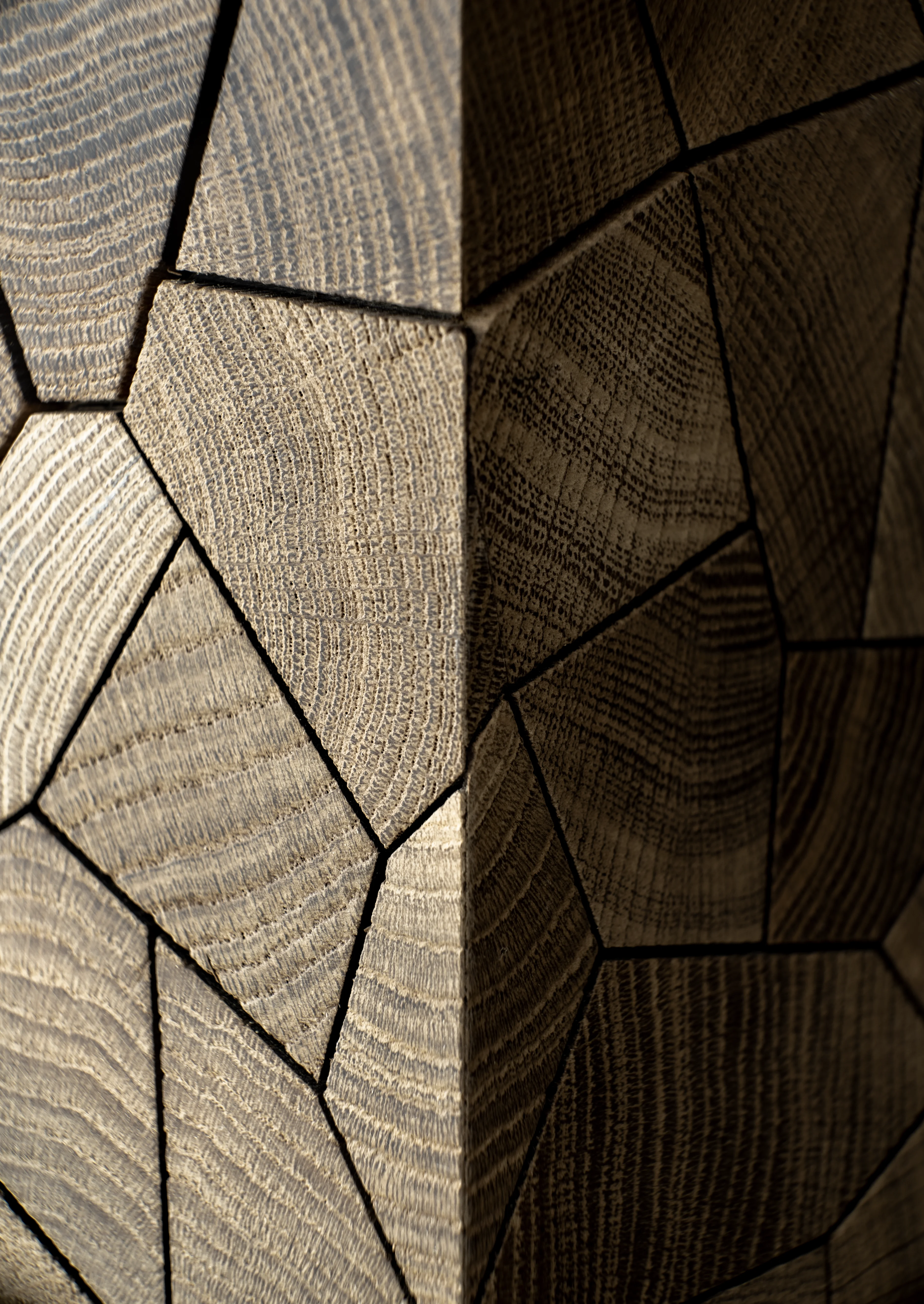
Smoked oak flooring, also referred to as fumed oak, is timber modified through a gas-phase reaction rather than a liquid surface coat. The oak boards or blocks are placed in an airtight chamber and exposed to ammonia vapors. The gas reacts with the naturally occurring tannic acid stored inside the oak cells, triggering a chemical transformation that darkens the timber to rich shades of brown.
Because this reaction relies entirely on the presence of tannins within the timber, the color change occurs throughout the entire thickness of the wear layer. European oak contains high levels of tannic acid, making it ideal for this treatment. In contrast to surface-stained boards, where a chip or scratch immediately exposes bright bare wood, core-smoked timber retains its deep hue across the full cross-section of the oak.
How does core smoking resist sun damage compared to surface stain?
Core smoking does not make timber impervious to light, but it fundamentally changes how the wood reacts to solar exposure. Because the coloration is chemical and deep rather than physical and topical, the material avoids the high-contrast fading patterns that plague conventionally stained floors.
When light degrades a topical stain, the barrier between the stained coat and the raw wood beneath collapses quickly. With smoked oak, light interacts with the modified tannins throughout the timber. Over years of exposure to daylight, a smoked floor softens gently and uniformly, retaining its depth of tone across high-exposure zones and shaded corners alike.
| Property | Core-Smoked Oak | Topically Stained Oak |
|---|---|---|
| Color penetration | Full depth of the oak top layer | Superficial surface layer (fractions of a millimeter) |
| Mechanism | Ammonia gas reacting with natural tannins | Liquid pigments or dyes applied to the surface |
| UV aging response | Subtle, uniform softening into a warm patina | Rapid localized bleaching and blotchy contrast |
| Scratch visibility | Low, because exposed wood underneath has the same tone | High, exposing bright untreated timber under the stain |
| Maintenance and wear | Preserves tonal depth through surface abrasion | Requires complete re-staining if the finish layer wears through |
What architectural strategies help protect wood floors from UV light?
Protecting a wood floor in a sunlit interior requires coordinating architectural glazing with appropriate timber finishes. Relying solely on wood finishes to repel intense solar radiation is rarely sufficient when floor-to-ceiling windows admit direct sunlight throughout the day.
Specifiers should incorporate low-emissivity (Low-E) glass and solar control coatings that filter out ultraviolet wavelengths and near-infrared heat. Adding spectrally selective window films can dramatically reduce UV transmittance without compromising natural daylighting or exterior views. Combining architectural shading, such as deep overhangs, automated louvers, or sheer drapery, prevents thermal shock and reduces localized photodegradation across open spaces.
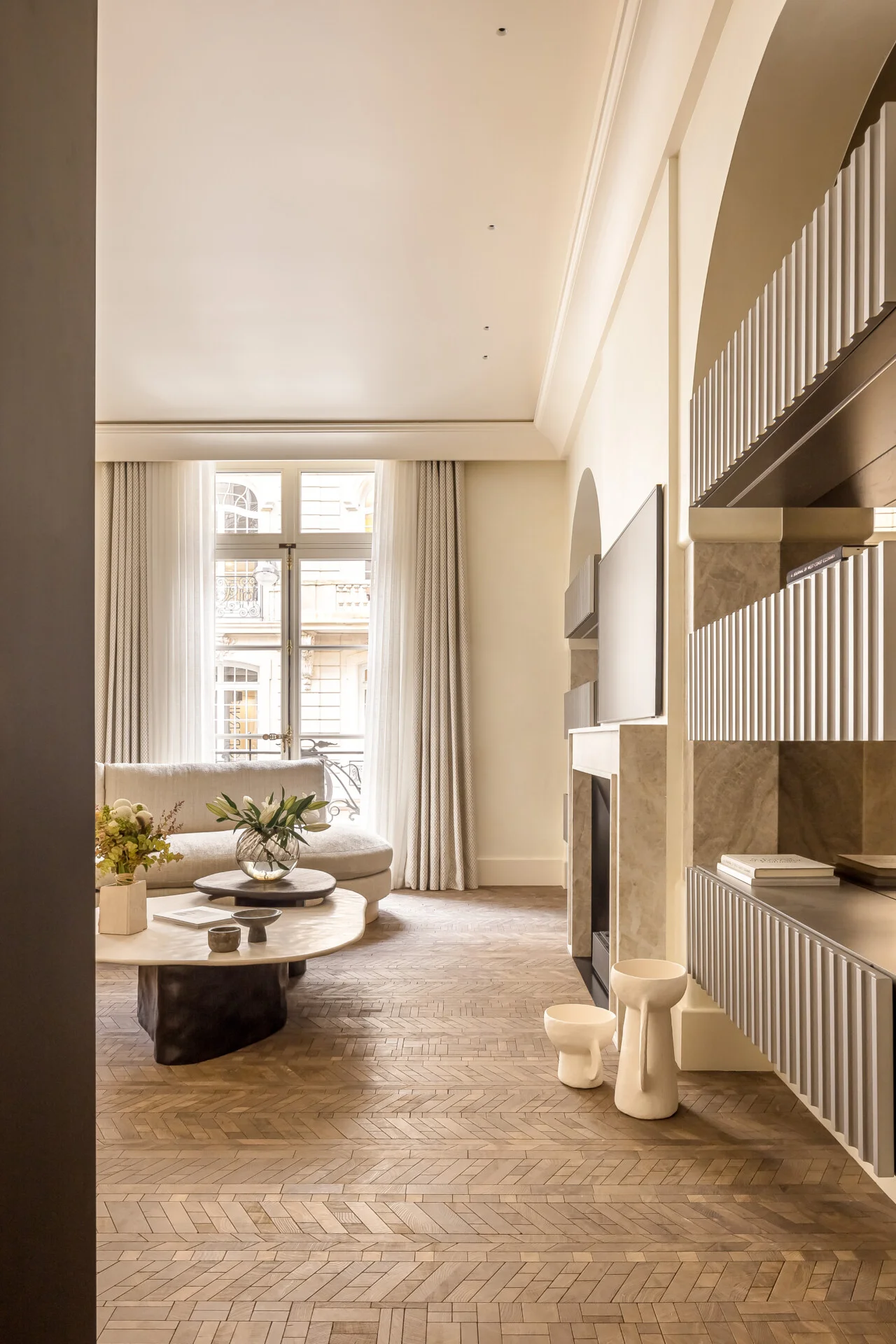
These strategies are especially effective when paired with resilient flooring formats. In retail and hospitality spaces with generous daylight, such as the Art gallery in New York with Forêt in the Smoke finish, or the Private residence in Miami featuring Opus in Smoke, the combination of architectural glazing and core-smoked oak maintains visual consistency across sunlit thresholds.
How does a wood floor develop a natural patina over time?
A natural wood patina is the gradual, harmonious evolution of color and texture that occurs as a living surface interacts with ambient light, foot traffic, and air. Rather than viewing solar exposure strictly as damage, thoughtful interior design treats daylight as an active participant in how a room matures.
True photodamage is recognizable by stark transitions, extreme drying, or brittle fibers where wood has been subjected to unmitigated heat and UV radiation. By contrast, a healthy patina develops when timber is shielded from excessive heat while allowing ambient daylight to soften its tones evenly over seasons. To learn more about how light interacts with oak over time, explore our discussions on wood floor sun fading and the characteristics of wood patina.
Choosing core-smoked oak floors with OscarOno Paris
OscarOno Paris manufactures architectural oak floors designed for rigorous architectural environments, offering core-smoked timber that develops a refined patina without the vulnerabilities of surface-applied stains.
The Forêt collection pairs endgrain oak with an engineered construction of 12 mm birch plywood and an 8 mm oak top layer. Available in Natural, Smoke (smoked through the full depth of the oak), and Black (charred, in the shou sugi ban tradition, with no stain), Forêt achieves Usage class 34 for very heavy commercial traffic, a Cfl-s1 fire rating, and FSC and PEFC certification. The same core-smoked durability is found in Opus, our signature endgrain pattern engineered with a 12 mm birch plywood backing and an 8 mm oak top layer, built to Usage class 34 standards.
For linear layouts, Canopée offers flatgrain oak in a select grade, built with 12 mm oak and a 4 mm top layer. Offered in Natural, Smoke, and Black, it meets Usage class 33 for heavy commercial traffic with Cfl-s1 fire certification. Order samples to evaluate our core-smoked finishes under natural lighting, or visit the Library to download comprehensive spec sheets, CAD details, and 3D files.
Frequently asked questions
Does smoked oak floor change color in sunlight?
Yes, all natural wood evolves when exposed to ambient light, but smoked oak softens gradually and evenly. Because the ammonia reaction darkens the oak through its full depth, it develops a balanced patina rather than the harsh, bleached patches associated with surface stains.
What is the difference between fumed oak and stained oak?
Stained oak relies on liquid pigments applied to the surface of the timber, penetrating only a fraction of a millimeter. Fumed or smoked oak is placed in a chamber where ammonia gas reacts chemically with the natural tannins inside the wood cells, coloring the timber through its entire thickness.
Can UV protective window films stop wood floor fading completely?
UV window films block the vast majority of ultraviolet rays, significantly slowing down photodegradation. However, visible light and ambient heat also contribute to color evolution over time, meaning no architectural glazing can halt natural timber maturation entirely.
How does endgrain oak perform under intense natural light?
Endgrain oak presents the growth rings of the tree directly to the surface, offering exceptional density and compressive strength. When core-smoked, endgrain blocks handle daylight exposure exceptionally well because the wood fibers carry the deep color uniformly throughout the wear layer.
More from the Atelier
Types of Parquet Floor: Architectural Patterns and Cuts
Discover the principal types of parquet floor, from chevron and herringbone geometries to Versailles panels, endgrain cuts, and engineered plank constructions.
Reclaimed Teak Flooring: End-Grain Strength and Resilience
Explore how reclaimed teak flooring and end-grain timber provide extraordinary durability, natural silica protection, and stability for demanding spaces.
How to Prevent Fading on Hardwood Floors: Design Guide
An architectural approach to managing sun exposure on wood floors, from spectrally selective glazing to finish choices and uniform patina development.