
Parquet de Versailles and Other Heritage Floors for Period Homes
A period floor is chosen the way the house was built: by the rank of the room.
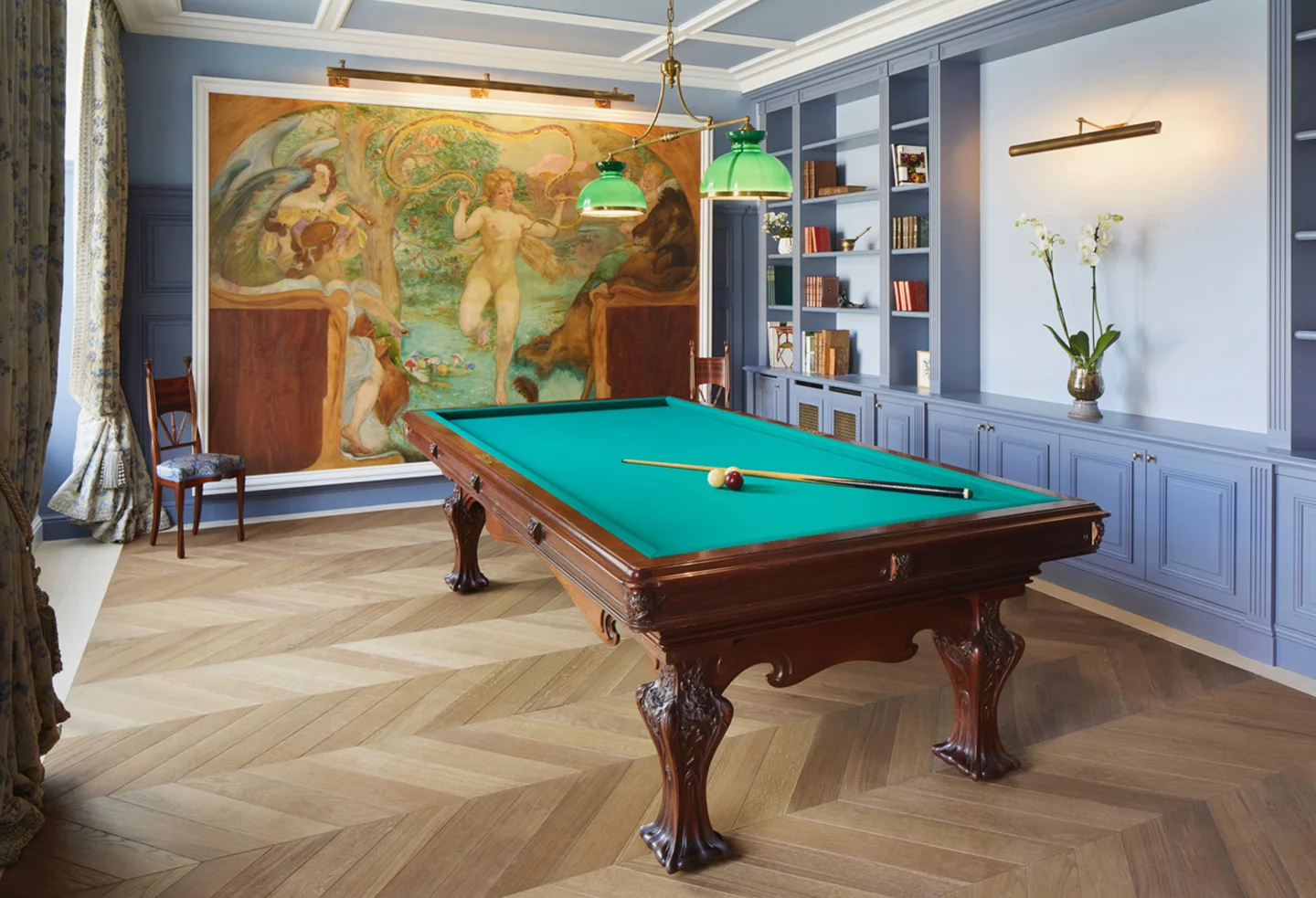
A period home looks right with the floors it would have had: parquet de Versailles panels in the grandest rooms, chevron or herringbone in the main rooms, and plain boards in the rest. Choose the pattern by the rank and size of each room, then keep the tone warm and the surface matte.
That rule works whether the house is a Haussmann apartment in Paris, a French country house or a Georgian terrace, though each has its own habits.
What is parquet de Versailles?
Versailles parquet is laid in square panels rather than in single boards. Inside each panel, short strips of oak are woven into a lattice of diagonals and framed by a border, so the floor reads as a grid of large squares, each with its own interlaced pattern. It is named after the Palace of Versailles, where it was laid in the late seventeenth century, and it became the floor of formal salons in French châteaux and Paris town houses.
Because the panels are assembled in the workshop and laid like large tiles, the pattern is exact from one panel to the next, which is what gives a Versailles floor its calm, ordered look. For its history and construction in more detail, see what is parquet de Versailles.
OscarOno Paris makes panel parquet as Dalle, oak composed into 800 x 800 mm panels, with Versailles among its designs, in the twelve lacquered Essentiel colors.
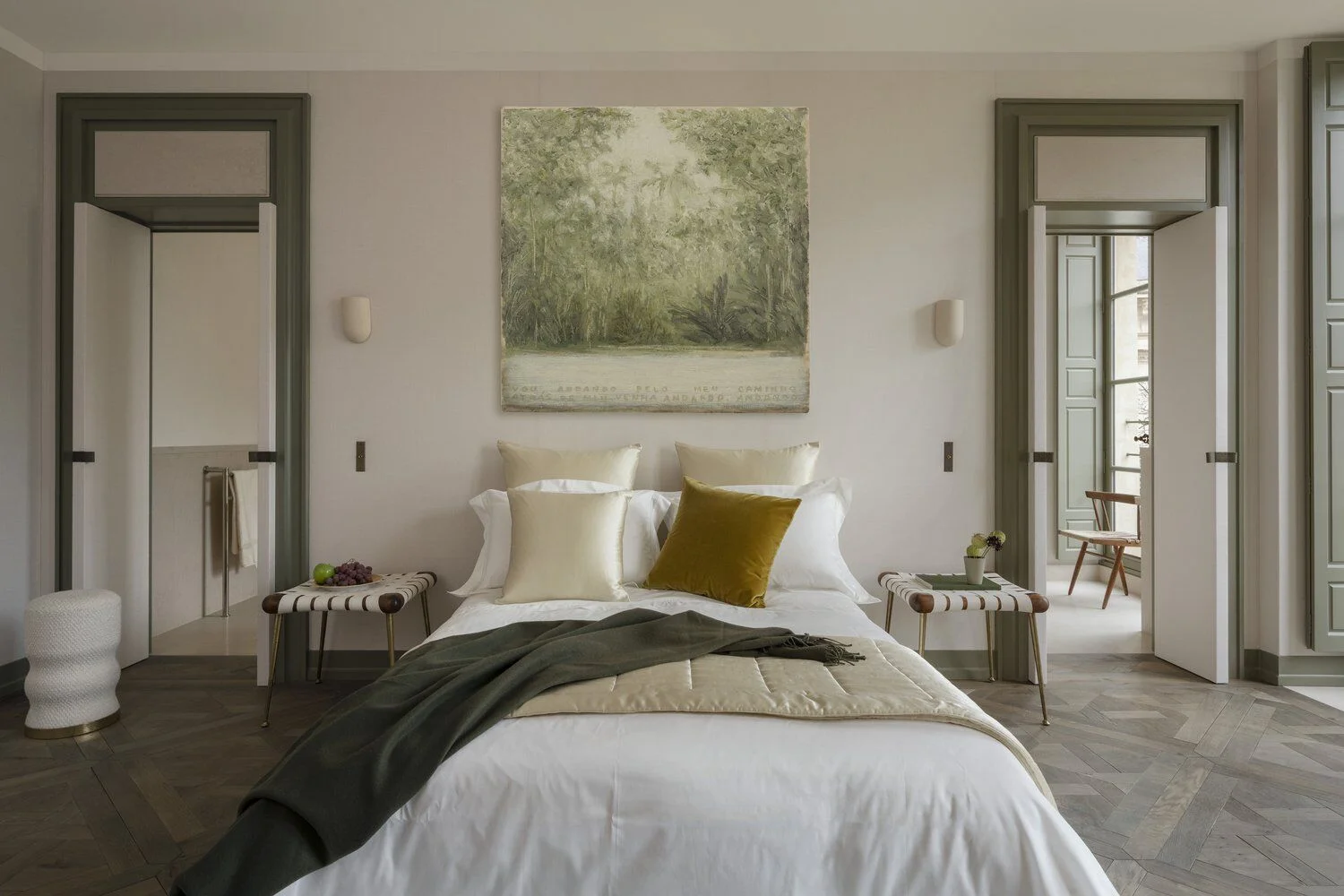
This private residence in Paris laid in Dalle shows how panel parquet in a natural finish suits the proportions of a Paris apartment.
Which floor suits which period home?
Each kind of house had its own hierarchy of floors. Matching it is what makes a new floor look as if it has always been there.
| House | What it usually had | A sympathetic choice today |
|---|---|---|
| Haussmann apartment, Paris | Chevron or herringbone through the reception rooms, sometimes Versailles panels in the main salon | Chevron or herringbone in oak, a panel floor for the salon |
| Château or hôtel particulier | Versailles and other panel parquets in the formal rooms | Panel parquet in the main rooms, a simpler pattern beyond them |
| Georgian house | Wide plain boards, often softwood, with oak in the best rooms | Wide straight boards in a warm, matte finish |
| Victorian or Edwardian house | Plain boards, with woodblock herringbone in halls and principal rooms | Herringbone in the hall and reception rooms |
Within a house, the grander the room, the more elaborate the floor. Putting a Versailles panel floor in a small back bedroom looks as wrong as plain boards in the main salon.
Chevron or herringbone in a Haussmann apartment?
Both belong there. Chevron, point de Hongrie in French, runs in long straight lines through the enfilade of reception rooms that defines a nineteenth-century Paris apartment, and it is the floor most people picture. Herringbone, bâtons rompus, is older and is found in many of the same buildings. OscarOno Paris makes them as Hongrie, the chevron, and Rompu, the herringbone Paris has laid for three hundred years.
If any original floor survives, it decides the matter: match its pattern, its board width and its direction in the rooms that have lost theirs. If none survives, chevron along the main axis of the apartment is the classic answer, and herringbone suits squarer rooms off it.
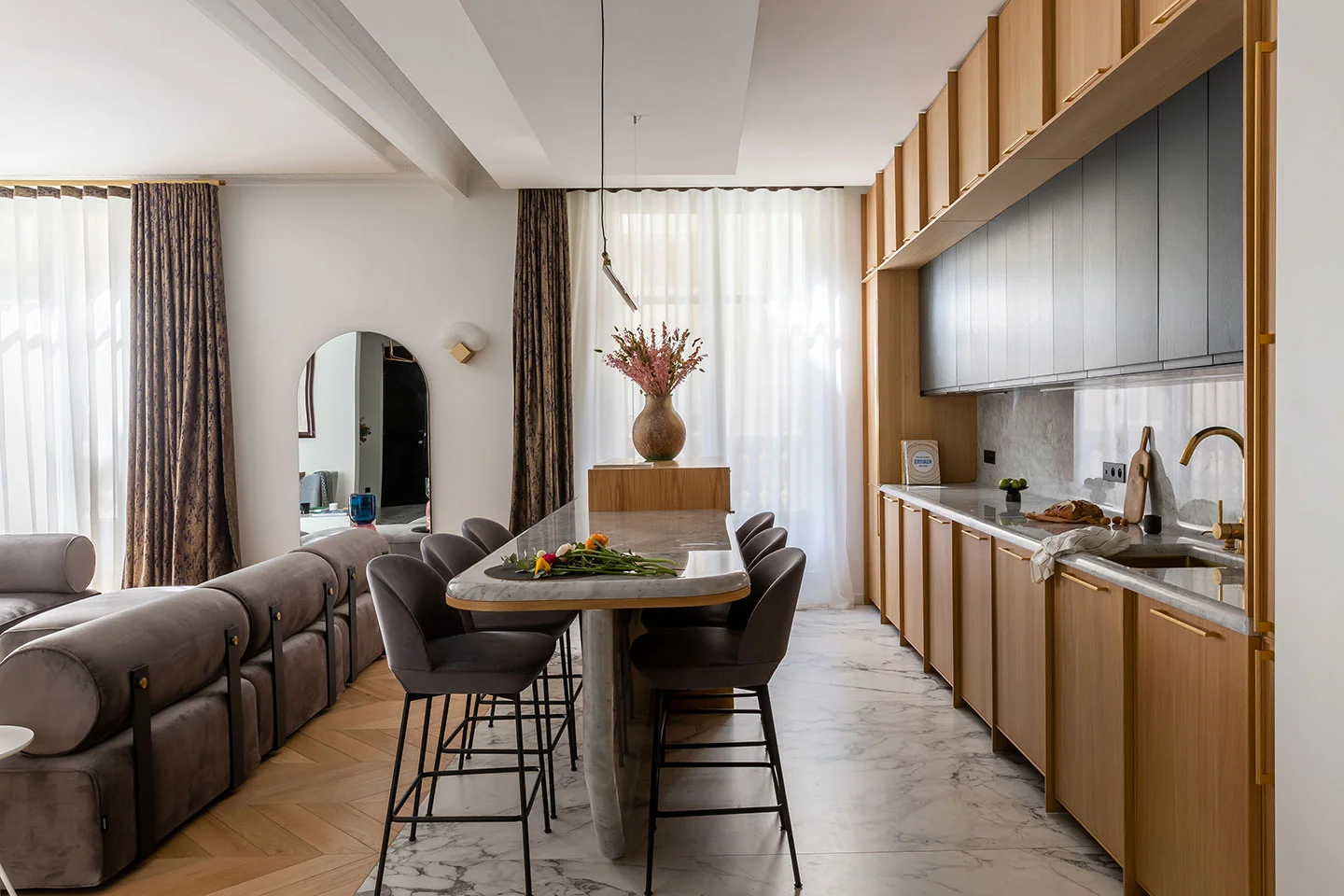
At Perrier Jouet's Maison Belle Epoque in Épernay, laid in Hongrie, a warm brown chevron sits naturally in a house of the period.
Restore the original floor or lay a new one?
If the original parquet is still there and sound, restoring it is almost always the right first move: no new floor carries the same history. Our guide to restoring an old parquet floor covers how to tell whether it can be saved. A new floor makes sense where the original is lost, has been covered with something else for decades, or is past repair.
When you lay new parquet in an old house, the subfloor matters more than the pattern. Old joists and boards move with the seasons and are rarely flat, so plan for a sound, level base before any patterned floor goes down; chevron in particular shows every error along its center line.
Which finishes look right in a period home?
Sheen matters more than anything else. A matte surface reads as old and lived in; a high gloss reads as new however traditional the pattern. Tone comes next: oak darkens and warms with age, so honey and warm brown tones sit more easily in a period room than gray or very pale ones, which belong to recent decades.
Avoid artificially distressed boards. A floor that has been made to look worn usually looks theatrical next to real old plaster and joinery; a well-made floor in a natural, matte finish will acquire its own wear honestly.
Frequently asked questions
What is parquet de Versailles?
A parquet laid in square panels, each made of short oak strips woven into a lattice of diagonals inside a frame. It takes its name from the Palace of Versailles, where it was laid in the late seventeenth century, and became the floor of grand salons in French houses.
Which parquet pattern suits a Haussmann apartment?
Chevron (point de Hongrie) and herringbone (bâtons rompus) are both found in nineteenth-century Paris apartments, with chevron the more typical in the long run of reception rooms. If original floor survives in some rooms, match its pattern, board size and direction in the others.
Is herringbone or chevron the older pattern?
Herringbone. The layout goes back to Roman brick and stone paving, long before wood floors. In wood, both patterns were laid in French houses by the eighteenth century, and chevron became the signature floor of nineteenth-century Paris apartments.
Can you put underfloor heating under parquet in an old house?
Often, yes. What matters is the construction of the boards and the installation, not the age of the house: patterned floors over underfloor heating are normally layered boards glued to a sound, dry screed. Check the spec sheet of the floor you choose before you commit.
Heritage parquet by OscarOno Paris
OscarOno Paris makes the three classic floors of French interiors in oak: Dalle panels, Hongrie chevron and Rompu herringbone. All three are flatgrain select oak, 12 mm with a 4 mm top layer, in the same twelve lacquered colors, so a panel floor in the salon can meet a chevron in the hallway in exactly the same tone. Dalle comes in 800 x 800 mm panels; Hongrie and Rompu in 150 mm or 190 mm widths. All are rated usage class 33, Cfl-s1, and FSC and PEFC certified.
Tone is the hardest thing to judge from a screen, and old rooms have their own light. Order samples to see them in place, and find spec sheets, CAD and 3D files in the library.
More from the Atelier
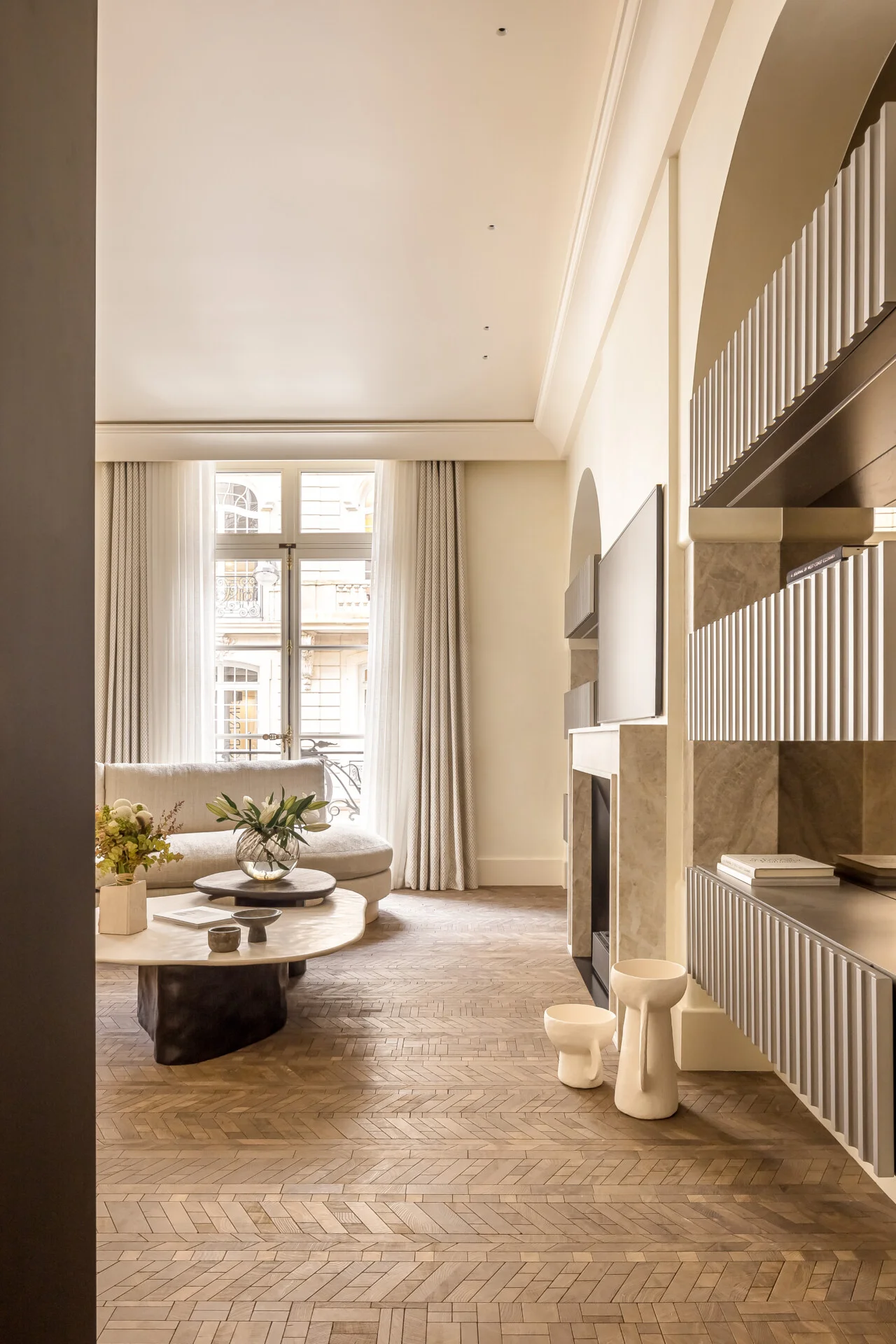
What Is Wood Terrazzo Flooring? An Architectural Guide
Wood terrazzo flooring unites reclaimed endgrain oak offcuts and mineral ground, creating continuous, tactile surfaces designed for circular luxury interiors.
Modern Versailles Parquet: The Classic Panel in Today's Interiors
The woven oak panel first laid in a palace still works in a contemporary room. What changes is the color, the construction and how freely the weave is drawn.
Wood Floor Interior Design: Pairing Oak with Linen, Stone and Brass
Start with the floor, then balance it: stone for weight, linen for softness, brass for light. A practical guide to designing a room around wood.